
 English
 русский
 Français
 Español
 Português
 Deutsch
 عربى
عربى
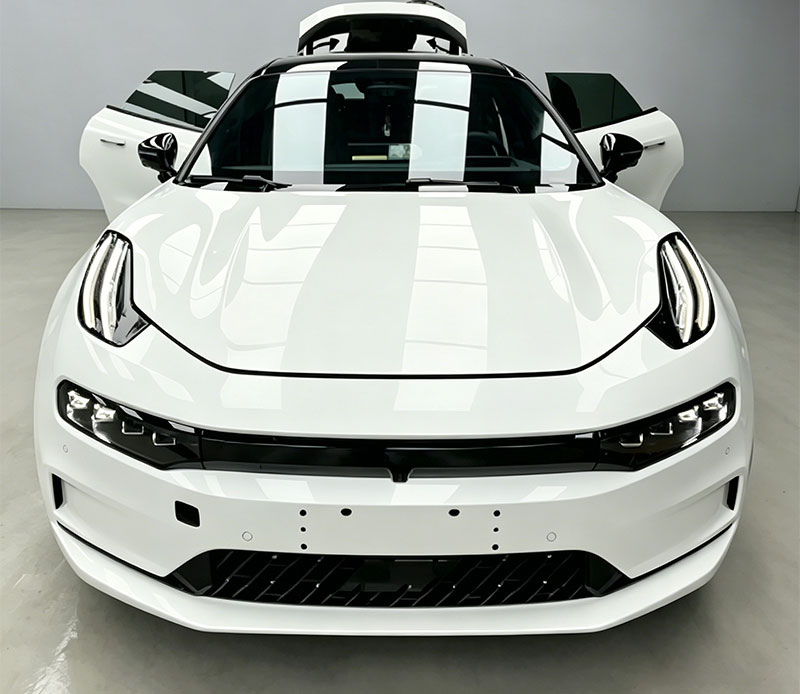
Elevate your vehicle's appearance with the High Gloss Laser White TPU Color PPF — a premium paint protection film that transforms your car with a stun...
See Details
Economy TPU Clear PPF: Affordable Protection Explained
Content
- 1 The Polyurethane Chemistry That Separates Economy from Premium
- 2 Topcoat Functionality and the Self-Healing Spectrum
- 3 Thickness Strategy in Value-Engineered Films
- 4 Adhesive Performance and Removal Cleanliness Over Time
- 5 Surface Energy and Contamination Resistance
- 6 Installation Geometry: Where Economy Films Earn Their Place
- 7 Identifying a Quality Economy TPU Clear PPF
- 8 The Economic Argument for Partial Coverage
What Economy TPU Clear PPF Actually Delivers
An Economy TPU Clear PPF is a paint protection film that uses thermoplastic polyurethane as its substrate while reducing cost through optimized material sourcing, simplified topcoat chemistry, and streamlined manufacturing—not by eliminating the properties that make PPF functional. It still absorbs stone impact energy through elastomeric deformation, still self-heals light swirl marks with heat, and still preserves factory paint from oxidation and etching for a service life typically spanning 3 to 5 years. The economy classification reflects a deliberate trade-off: you accept a slightly lower ultimate tensile strength or a marginally thicker gauge in exchange for a price point that makes full-frontal coverage accessible to a much wider range of vehicle owners. The film does not compete with premium 10-year warrantied products on every specification line; it competes on value, and for vehicles that see normal commuting conditions rather than track duty, the protective outcome is functionally similar.
The Polyurethane Chemistry That Separates Economy from Premium
The cost structure of a TPU clear PPF is dominated by the polyurethane raw material. Premium films use polycaprolactone-based TPU, which delivers exceptional hydrolysis resistance and optical clarity but carries a higher resin cost. Economy TPU Clear PPF typically uses a polyether-based TPU or a polycaprolactone-polyether copolymer blend. Polyether TPU offers good flexibility at low temperature and reasonable UV stability, but its hydrolysis resistance sits below that of pure polycaprolactone. This distinction matters in regions with persistent high humidity. A polyether film exposed to combined heat and moisture above 85% relative humidity for extended periods will experience earlier chain scission at the ester linkages, manifesting as a gradual loss of elongation before any visible yellowing occurs. The practical implication is an economy film on a garaged vehicle in a moderate climate performs indistinguishably from a premium film for years, while the same film on a car parked outdoors in coastal Singapore will show its limits sooner.
Aromatic vs. Aliphatic TPU and Yellowing Resistance
A critical differentiator in Economy TPU Clear PPF is whether the TPU is aromatic or aliphatic. Aromatic TPU is significantly cheaper—up to 40% less per kilogram—but contains benzene ring structures that absorb UV light and progressively form quinoid chromophores, the chemical pathway for yellowing. Economy films using aromatic TPU will yellow noticeably within 12 to 24 months of sun exposure, especially on white paint. Higher-grade economy films use aliphatic TPU and substitute cost reduction into the topcoat and adhesive layers instead. The advice is straightforward: if clarity permanence matters, confirm the TPU chemistry type before the price tag.
Topcoat Functionality and the Self-Healing Spectrum
All TPU films possess some degree of bulk self-healing because the soft segments in the polymer matrix are mobile at ambient temperature. When a scratch displaces material rather than removing it, the elastic recovery of those segments gradually fills the scratch valley. Premium films accelerate this with a dedicated elastomeric topcoat that responds to heat in seconds. Economy TPU Clear PPF often consolidates the topcoat into a thinner, single-layer clear coat that is applied directly during the casting process. The self-healing is still present but requires higher activation temperature or longer recovery time. A swirl mark that disappears in 30 seconds under warm water on a premium film may need a heat gun applied at 60°C for the same result on an economy film. This is a functional difference but not a protective deficiency—the film still prevents the scratch from reaching the clear coat, which is the primary job.
Thickness Strategy in Value-Engineered Films
Economy TPU Clear PPF frequently uses total thickness as a compensation mechanism. Where a premium 8 mil film relies on a highly engineered topcoat for stain resistance, an economy film may ship at 8.5 mil or 9 mil with a thicker TPU core and a thinner functional top layer. The added thickness improves impact distribution at a lower material cost than upgrading the chemistry. This approach has installation implications: thicker economy films exhibit higher initial stiffness, requiring more stretch and heat during installation on complex bumper contours. An experienced installer compensates with technique; an inexperienced one produces lift lines and adhesive failure at stretched edges. The economy in material cost can thus be partially offset by increased labor time, a factor that should be priced into the installation quote rather than discovered on delivery day.
| Layer | Economy TPU PPF | Premium TPU PPF |
|---|---|---|
| Topcoat | 0.5–0.8 mil, single-layer clear | 1.0–1.5 mil, multi-layer elastomeric |
| TPU Core | 6.5–7.5 mil, polyether or copolymer | 5.0–6.0 mil, polycaprolactone |
| Adhesive | 1.0–1.5 mil, standard acrylic | 1.0–1.5 mil, low-surface-energy formulated |
| Total Nominal Gauge | 8.5–9.5 mil | 7.5–8.0 mil |
Adhesive Performance and Removal Cleanliness Over Time
The pressure-sensitive adhesive layer in Economy TPU Clear PPF represents a significant cost lever. Premium films use adhesives formulated with crosslinking agents that maintain peel strength within a narrow window across years of thermal cycling. Economy films may use less aggressively crosslinked acrylic adhesives that are fully functional at installation but undergo gradual additional crosslinking under UV and heat exposure. The result is an upward drift in peel force over the film's service life. At the three-year removal point, an economy film on a dark-colored hood in a sunny climate may require heat-assisted removal and leave behind adhesive islands that demand solvent cleaning. This is not a film failure; it is a known characteristic that should guide the removal timeline. Economy TPU Clear PPF should generally be removed and replaced within the 3-to-5-year window the chemistry supports, rather than pushed to the 7-plus years a premium film tolerates.
Surface Energy and Contamination Resistance
One of the largest day-to-day differences between economy and premium films surfaces in water behavior. A premium topcoat achieves a water contact angle above 100 degrees, causing water to bead and roll off, carrying dirt with it. Economy films with thinner clear coats often exhibit initial contact angles of 85 to 95 degrees that degrade toward 75 degrees within 18 months as the top layer micro-abrades from road grit. The film still protects, but it holds water films longer and requires more frequent washing to avoid water-spot mineral etching. A practical mitigation strategy is applying a ceramic coating designed for PPF over the economy film, which boosts surface energy performance to premium levels at a fraction of the cost difference between the two film grades. This hybrid approach—economy film plus aftermarket ceramic topper—often delivers the best value-to-performance ratio for owners willing to perform the additional maintenance step.
Installation Geometry: Where Economy Films Earn Their Place
The vehicle zones that benefit most from Economy TPU Clear PPF are those with simple curvature and high impact exposure but low visual scrutiny. The front bumper flat sections, mirror caps, door edges, and rear bumper top ledge absorb the majority of stone strikes and parking-lot abrasion. These areas do not require the extreme optical clarity and perfect self-healing of a premium film; they require a sacrificial layer that absorbs kinetic energy and is affordable to replace. Installing an economy film on these high-wear zones and reserving premium film for the full hood and fenders—where optical perfection and long-term clarity are paramount—is a common and sensible deployment strategy. It reduces total installation cost by 25 to 35% while covering the areas that statistically take the most damage.
- Flat or gently curved panels allow thicker economy films to lay down without excessive stretch.
- High-wear edges and bumper tops benefit from the sacrificial economics of a lower-cost film.
- Complex compound curves on modern bumpers may require the higher elongation of premium TPU to avoid adhesive failure.
Identifying a Quality Economy TPU Clear PPF
Not all economy films are equivalent, and the category contains both legitimate value-engineered products and low-quality films that will fail prematurely. A quality economy film should exhibit no optical haze exceeding 1.5% when measured on a haze meter, uniform gloss across the roll width with no die lines from the casting process, a liner that releases cleanly at a consistent peel force without silicone transfer, and a self-healing response that closes a brass-wire brush scratch within 30 seconds under a 70°C heat source. If a film sample fails any of these four tests, it is not an economy product—it is a substandard product. The distinction matters because a failed film that must be removed after one year costs far more in labor and paint correction than the initial savings.
The Economic Argument for Partial Coverage
The market position of Economy TPU Clear PPF makes the most sense when it enables a coverage level that would otherwise be unaffordable. A full-frontal package using an economy film provides more total protection than a partial-hood-only package using a premium film at the same price. Since stone chips do not stop at the edge of a partial hood installation, the broader coverage of an economy film delivers superior real-world paint preservation. The calculation shifts if the vehicle is a high-value asset with a factory finish that would be expensive to match—then the optical and longevity advantages of premium film outweigh the coverage argument. But for daily-driven vehicles in normal environments, coverage area beats marginal chemistry advantages, and economy films make extended coverage achievable.
Related products
-
-
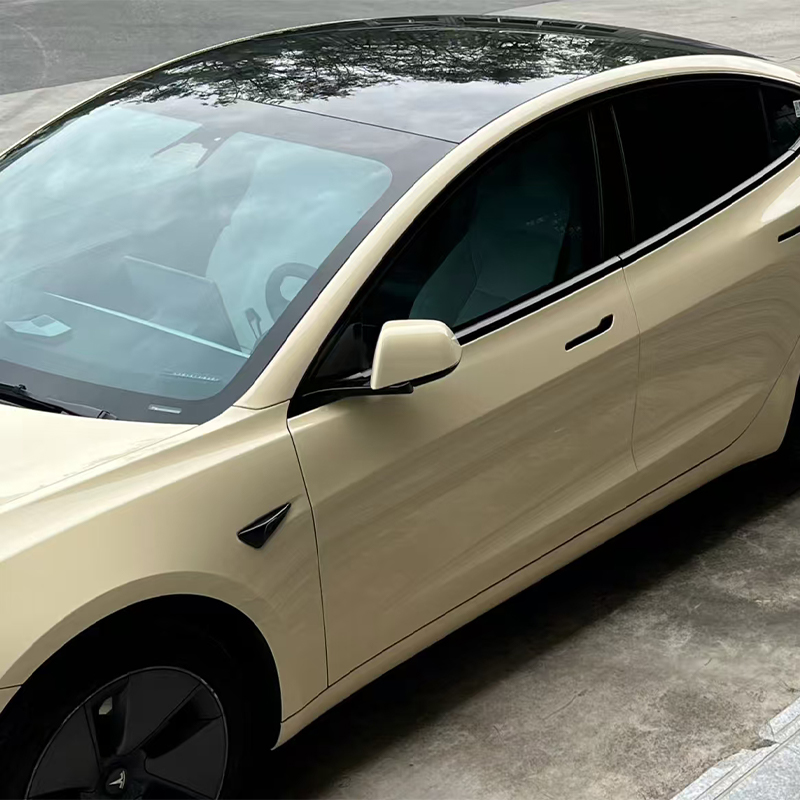
Crystal Khaki Milan is a refined and fashion-forward color change PPF that blends the earthy warmth of khaki with an Italian-inspired elegance. This d...
See Details -
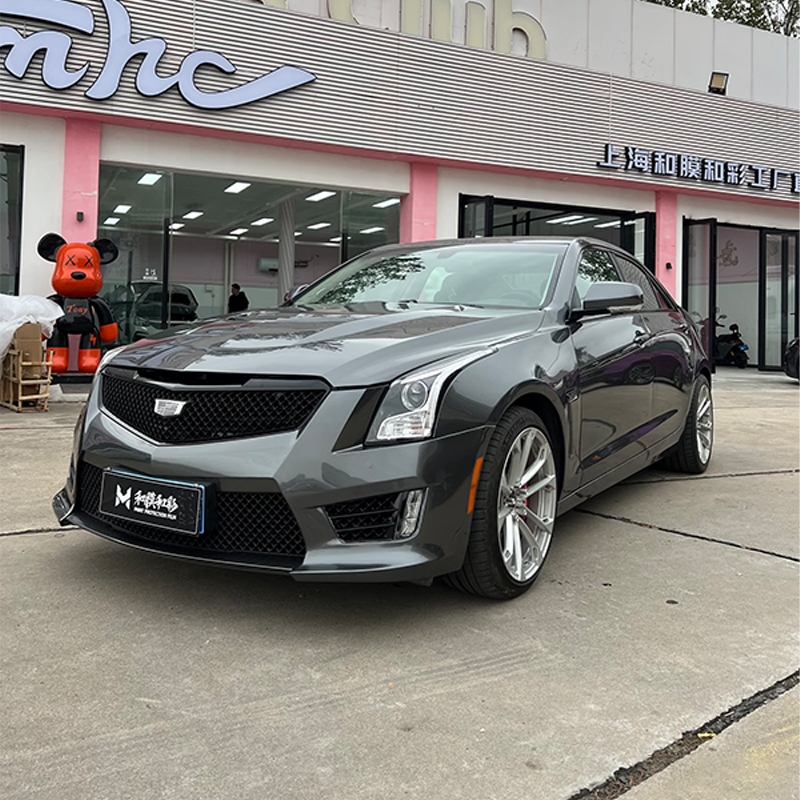
Refine your vehicle's profile with the Metallic Gun Gray TPU Color PPF — a sophisticated film that brings the understated power of gunmetal gray to yo...
See Details -
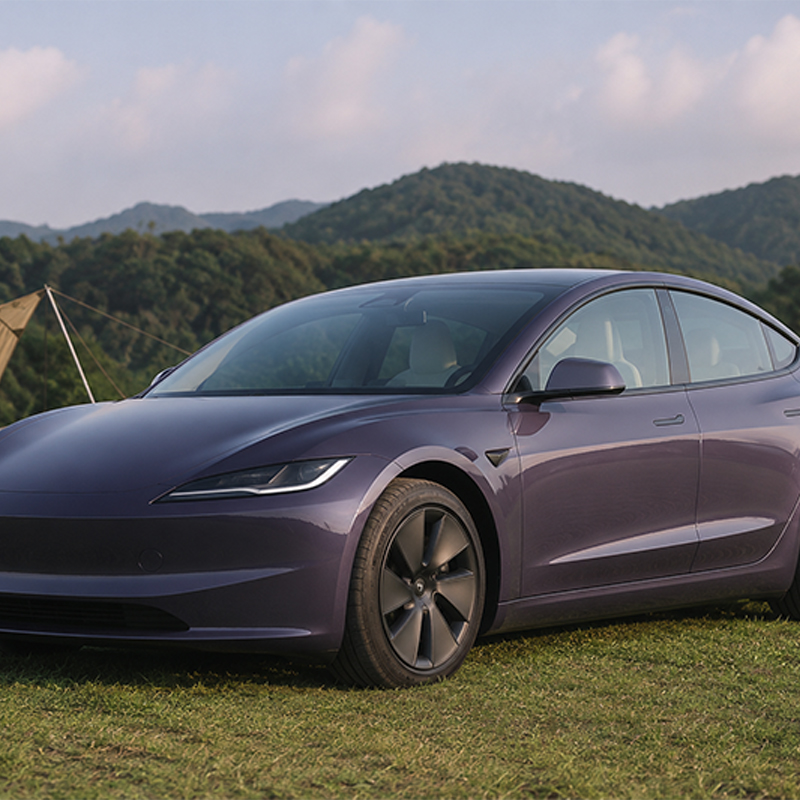
Crystal Violet is a captivating color change PPF that brings a mysterious, jewel-like purple hue to your vehicle's exterior. Rich and luminous, this s...
See Details
GET THE LATEST QUOTATIONS
-
 No. 5, Datang Road, East District, Development Zone, Guangde City, Xuancheng City, Anhui Province,242200, China
-
 [email protected]
-
 +86 18170340295
PRODUCTS
MOBILE WEB
Copyright Anhui He He New Materials Co., Ltd. All Rights Reserved.
 Wholesale TPU PPF Film Automotive TPU PPF Manufacturer