
 English
 русский
 Français
 Español
 Português
 Deutsch
 عربى
عربى

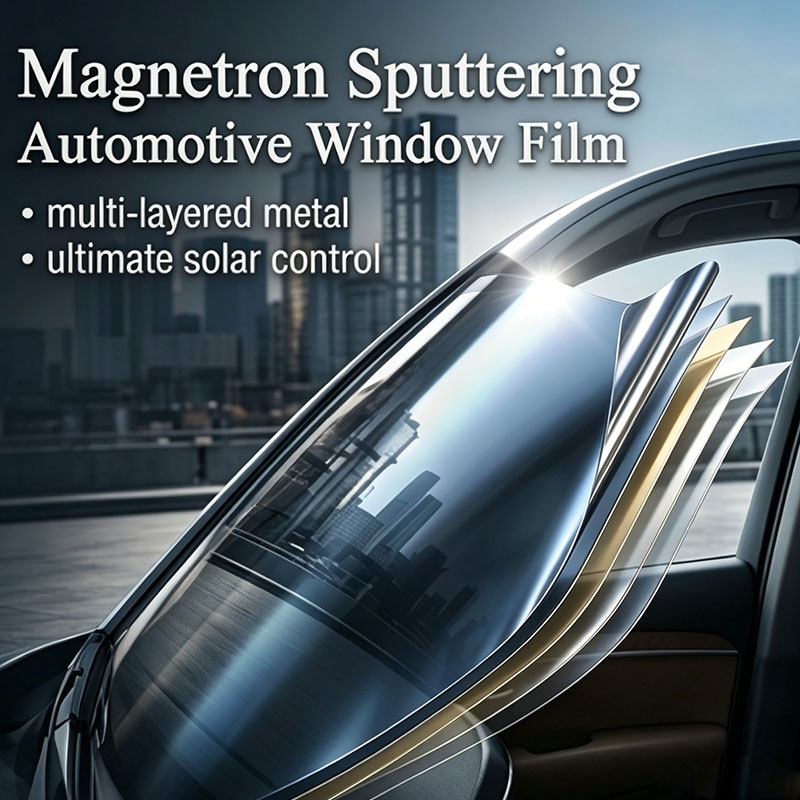
Magnetron Sputtering Automotive Window Film
Our flagship series utilizing precision magnetron sputtering technology. Multiple layers of precious metals (including dual silver) provide the highest heat rejection in the industry while maintaining low interior reflectivity for a premium metallic finish.
Our flagship Magnetron Sputtering Automotive Window Film delivers professional-grade solar control through precision vacuum deposition. Engineered with advanced multi‑layer magnetron sputtering, it deposits uniform nanoscale layers of precious metals, including dual silver, onto a high‑performance optical substrate. This structure provides consistent, industry‑leading heat rejection by efficiently blocking infrared radiation, lowering cabin temperature and easing air‑conditioning load. It maintains exceptionally low interior reflectivity to preserve clear outward visibility and reduce driver eye fatigue, while offering a refined, premium metallic appearance without excessive gloss or distortion. The film also provides strong ultraviolet rejection to help protect occupants and slow interior fading. Designed for durability and optical stability, it resists discoloration, peeling, and bubbling over time. Balancing high thermal performance, visual comfort, and elegant styling, it serves as a practical, long‑lasting upgrade for daily driving and vehicle preservation.
information to be updated
Industry Knowledge
The Cathode Target Poisoning Dilemma and Deposition Stability
Reactive Magnetron Sputtering Automotive Window Film production walks a process tightrope known as target poisoning. When depositing dielectric compounds like titanium nitride or indium tin oxide, oxygen or nitrogen reactive gas must be precisely metered into the vacuum chamber. If the reactive gas flow slightly exceeds the gettering capacity of the sputtered metal atoms, a compound layer forms on the cathode target surface itself, dramatically slowing the sputter rate and causing arcing. Anhui He He New Materials Co., Ltd., established in 2019, operates its precision coating production within the transition region of the hysteresis curve using closed-loop optical emission spectroscopy feedback. This is not a batch-mode guess but a millisecond-response plasma monitoring system. As a direct manufacturer, we control the reactive sputtering process to maintain a constant metal-mode deposition, ensuring each layer of the optical stack in our Magnetron Sputtering Automotive Window Film achieves the exact refractive index and extinction coefficient specified in the design. For contract manufacturing clients, this translates to roll-to-roll consistency where the transmitted color coordinates under D65 lighting remain within a ΔE of 1.0 across 1000-meter master rolls, a tolerance that resellers of commodity wholesale clear protective film simply cannot guarantee because they lack access to the vacuum platform.
Hysteresis-Free Control for Transparent Conductive Oxide Layers
Magnetron Sputtering Automotive Window Film designed for low-emissivity or IR-reflective performance often requires transparent conductive oxide layers. The resistivity of these layers is hypersensitive to oxygen partial pressure during deposition. A minor drift moves the film from conductive IR-reflecting behavior to insulating transparent behavior, nullifying the thermal rejection spec. Anhui He He New Materials Co., Ltd. employs a dual-cathode closed-field unbalanced magnetron configuration. This arrangement confines the plasma more intensely near the substrate, enabling higher ion bombardment density at lower chamber pressures. Within our full-industry-chain R&D platform, we use this hardware advantage to deposit ITO or AZO layers with sheet resistivities below 15 Ω/sq while maintaining visible light transmission above 78%. The following table details the process-to-performance relationship we govern as a direct manufacturer, distinguishing our sputtered films from inferior evaporated or wet-coated ceramic imitations:
| Process Parameter | Evaporated/Wet-Coated Consequence | HEHE Magnetron Sputtering Precision Outcome |
| Oxygen Partial Pressure Stability | ±5% fluctuation leads to patchy resistivity | ±0.5% via plasma emission line monitoring |
| Substrate Ion Current Density | Low (< 1 mA/cm²) yields porous, unstable films | > 5 mA/cm² (Fully densified oxide layer) |
| Roll-to-Roll Resistivity Uniformity | ±20% across web width | ±3% (Enables predictable signal transparency) |
Electromagnetic Compatibility: Engineering the Transmission Window
A persistent and legitimate concern with Magnetron Sputtering Automotive Window Film is its potential to block radio frequency signals, given that it is essentially a thin metal coating on glass. The solution lies not in removing the metal entirely but in designing the optical stack as a frequency-selective surface. Anhui He He New Materials Co., Ltd. engineers the conductive layer stack to function as a band-pass or transparent conductor in specific frequency ranges. By controlling the nano-structure of the sputtered metal—often employing a discontinuous metal island morphology just below the percolation threshold—we achieve high DC resistivity to avoid Faraday cage effects while retaining strong IR reflectance through plasmonic resonance. Our specialty adhesive R&D team also formulates edge coatings that resist oxidization, preventing the film border from becoming a high-resistance termination that re-radiates noise. This capability, rooted in our vertically integrated manufacturing platform, ensures that a vehicle equipped with our sputtered films retains full GPS, 5G telematics, and electronic toll collection functionality, addressing the number-one hesitation installers face when recommending metal-based films.
Interfacial Stress in Multi-Layer Stacks and Flex-Crack Durability
A sputtered film stack may contain 7 to 12 alternating metal and dielectric layers, each with intrinsic tensile or compressive stress. When applied to a rear window with a defroster grid, thermal cycling causes differential expansion between the thick defroster line and the glass. The cumulative stress in the multi-layer stack concentrates at the step height of the heater element, initiating micro-cracks that propagate as visible silvery lines. Anhui He He New Materials Co., Ltd. controls the intrinsic stress of each sputtered layer by adjusting the deposition pressure and bias voltage during the vacuum process. Low-stress chromium sub-oxides act as sacrificial compliant layers within the functional coating formulation, absorbing strain without cracking. As a direct manufacturer offering in-depth customization, we can tailor the stress budget of the entire thin-film stack to match the substrate thickness. A thicker TPU clear layer lamination can be balanced with a deliberately compressive dielectric overcoat, neutralizing the net bending force and ensuring that the Magnetron Sputtering Automotive Window Film survives ten thousand defroster cycles without developing the hairline fracturing characteristic of rigidly designed films.
Corrosion at the Dielectric-Metal Interface: The Edge Quality Factor
The Achilles' heel of sputtered films is edge corrosion, where moisture ingress through a poorly sealed cut edge initiates galvanic delamination between the noble metal layer and the reactive dielectric. The silver or copper alloy layers critical for IR reflection act as a cathode, while the adjacent dielectric oxidizes anodically, forming a cloudy, widened edge border. Anhui He He New Materials Co., Ltd., leveraging its complete in-house system covering specialty adhesive R&D, formulates the mounting adhesive itself as an edge sealant. We incorporate hydrophobic nano-fillers and corrosion inhibitors that leach into the cut edge zone upon installation, passivating the exposed metal interfaces. Additionally, our precision coating production integrates an inline edge-encapsulation step where the TPU top layer wraps micro-millimeters around the slit edge, physically isolating the sputtered stack from atmosphere. This dual protection is critical for the automotive beauty sector where flawless edge cosmetics must be retained for years, and it is a feature only achievable by a true full-industry-chain production factory that controls both the vacuum deposition and the subsequent lamination and adhesive coating processes under one roof.
Spectral Target Engineering for Heat Rejection Beyond Total Solar Energy Rejected
A Magnetron Sputtering Automotive Window Film is often benchmarked solely by its Total Solar Energy Rejected metric, yet the spectral shape of the transmission curve dictates true passenger comfort. Rather than a flat reduction across all wavelengths, selective sputtered stacks can be designed using the optical admittance method to create a "rectangular" transmission profile: high transparency between 400–700nm (visible) and near-opaque reflection from 780–2500nm (near-infrared). Anhui He He New Materials Co., Ltd. develops custom spectral targets within its R&D platform using multi-band dielectric-metal-dielectric Fabry-Perot cavities. By precisely controlling the thickness of a cavity spacer layer to within ±2 nanometers, we position the reflection band edge exactly at 700nm. This creates a film with a visibly clear appearance that cuts solar heat dramatically more efficiently than a dark-tinted film of equivalent VLT. For brands focused on the new energy battery industry, this spectral engineering directly reduces air-conditioning compressor load without darkening the cabin, preserving the open, airy feeling of panoramic glass roofs while maximizing vehicle range. As TPU Clear PPF Manufacturers, we combine this sputtered core with our premium clear protection films to offer laminated products that simultaneously reject heat and protect the glass exterior.
Inline Optical Monitoring for Adaptive Layer Thickness Control
Maintaining the precise color of Magnetron Sputtering Automotive Window Film across an entire production campaign requires direct optical monitoring of the moving web within the vacuum chamber. Anhui He He New Materials Co., Ltd. employs broad-bandwidth spectrophotometers positioned at multiple points across the web width immediately after the deposition zone. This generates a real-time transmission spectrum that is compared against the theoretical design stored in the coating control software. When the software detects a peak shift indicating a layer is trending thick due to target erosion, it dynamically adjusts the transport speed or power for the subsequent cathode, correcting the spectral output mid-run without stopping the process. This adaptive control is a cornerstone of our cutting-edge film solutions platform. The list below details the monitoring wavelengths critical to this closed-loop quality system, demonstrating the depth of process control integrated into our full-industry-chain factory:
- 550nm center wavelength shift tolerance: Monitored to ±1.5nm; a drift of 3nm in the peak transmission wavelength changes the film's perceived color from neutral to distinctly green or magenta.
- 950nm reflectance setpoint: IR reflectance must remain above 90%; a drop indicates the metal layer is becoming too thin due to target exhaustion or reactive gas poisoning, allowing IR photons to penetrate the stack.
- 2500nm edge slope control: The steepness of the transition between the visible and IR rejection band is continuously calculated; a shallowing slope signifies interfacial roughness or interlayer diffusion, degrading the sharp color-to-clear transition demanded by premium automotive beauty applications.
Adhesion Promotion on Polymer Webs Without Thermal Damage
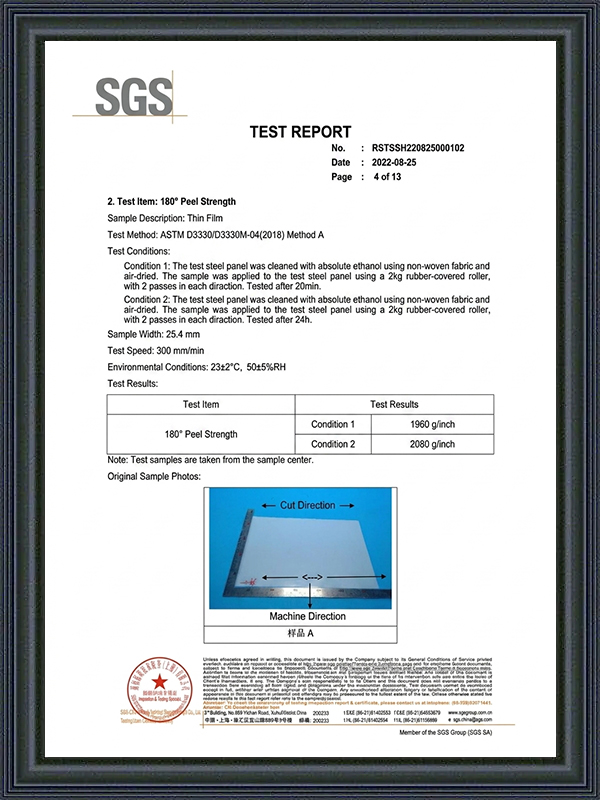
Sputtering onto thin polymer substrates like PET or TPU for Magnetron Sputtering Automotive Window Film presents a temperature limitation. High-rate deposition requires the substrate to pass in front of a plasma source radiating intense thermal energy. If the web exceeds its glass transition temperature, it stretches, wrinkles, or embrittles. Anhui He He New Materials Co., Ltd. manages this through a cryogenically cooled deposition drum and a proprietary plasma pre-treatment station integrated before the sputtering cathodes. This pre-treatment functionalizes the polymer surface with polar groups that promote oxide nucleation without relying on high temperature to drive adhesion. The result is a peel-strength bond between the first dielectric layer and the TPU clear base that exceeds 2000g/inch, measured using the cross-hatch tape test after 240 hours of 85°C/85% RH damp heat conditioning. As a direct manufacturer, we have the unique ability to tailor film thickness and match the thermal expansion coefficient of the sputtered stack to the specific polymer base film chosen for the final product, guaranteeing that the reflective functional coating does not shatter like eggshell when the film is mechanically deformed during installation on complex window curvatures.
The Sputter-Hybrid Architecture for Dual Functionality
Combining Magnetron Sputtering Automotive Window Film technology with wet-coated nano-ceramic layers creates a hybrid film that leverages the strengths of both platforms. In a dual-layer construction, the underlying sputtered metal-dielectric stack provides specular IR reflectance, while an overlying wet-coated ceramic layer absorbs residual near-infrared energy in the transition spectrum and provides a forgiving scratch-resistant surface. Anhui He He New Materials Co., Ltd. is uniquely positioned to manufacture such hybrids because we operate both the vacuum sputtering line and the precision slot-die wet coating line within our full-industry-chain factory. The challenge lies in the interface between the inorganic sputtered oxide and the organic wet coating; adhesion here must survive the aqueous alkaline environment of an installation slip solution. Our functional coating formulation includes an adhesion-promoting silane coupling agent specifically matched to the surface energy of the topmost sputtered layer. For contract manufacturing clients, this means we can supply a complete window film solution where the internal metal layers are hermetically sealed from moisture by the external TPU clear protection, offering a wholesale product with a significantly extended useful lifetime compared to film stacks where the metal is simply coated with a thin, less protective hardcoat.
Reactive Co-Sputtering for Gradient Solar Control
A sophisticated variant we produce is gradient Magnetron Sputtering Automotive Window Film, where the solar control performance subtly changes from the top of the windshield to the bottom. This is achieved through reactive co-sputtering, powering two adjacent targets of different materials at varying ratios as the web moves past, or by utilizing a precision linear shutter that partially masks the substrate. The result is a film with a dark, highly reflective band near the roof line that smoothly graduates to a higher VLT at the driver's eye level. Anhui He He New Materials Co., Ltd. utilizes this technique to create "visored" films that eliminate the need for a separate dark strip across the top of the windshield, integrating this transition seamlessly into the glass. This capability emerges directly from our mission to provide cutting-edge film solutions for the automotive beauty and new energy sectors, where panoramic glass roofs demand both head-impact safety and a glare-free aesthetic transition zone without mechanically applied shades. Our direct control over the sputtering process allows this gradient to be specified by the customer—the slope, start point, and endpoint—transforming the film into a custom-engineered optical component rather than an off-the-shelf commodity.
-
 No. 5, Datang Road, East District, Development Zone, Guangde City, Xuancheng City, Anhui Province,242200, China
-
 [email protected]
-
 +86 18170340295
Copyright Anhui He He New Materials Co., Ltd. All Rights Reserved.
 Custom Magnetron Sputtering Automotive Window Film Suppliers