
 English
 русский
 Français
 Español
 Português
 Deutsch
 عربى
عربى

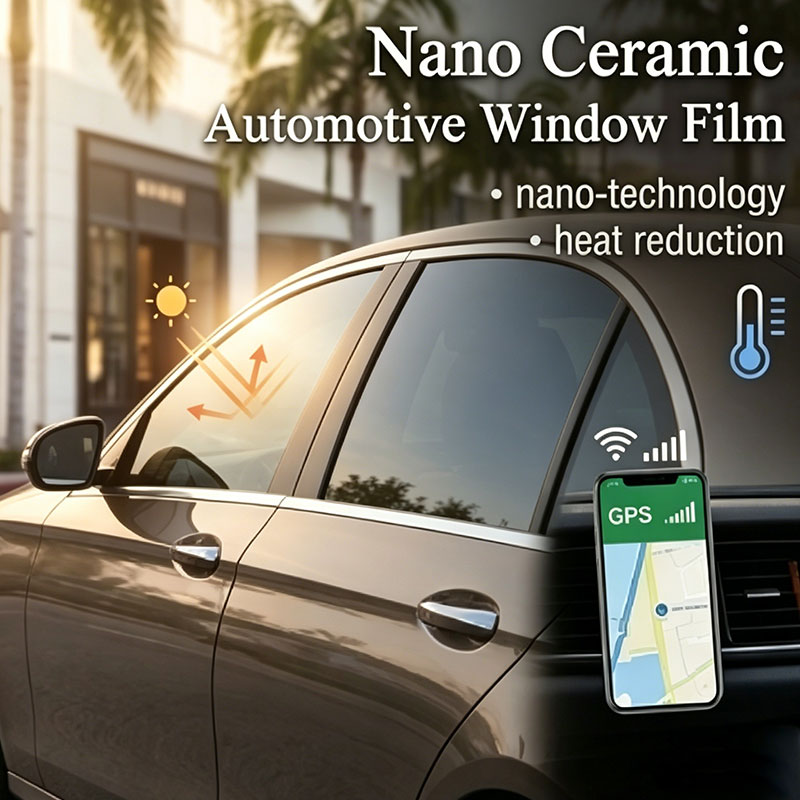
Nano Ceramic Automotive Window Film
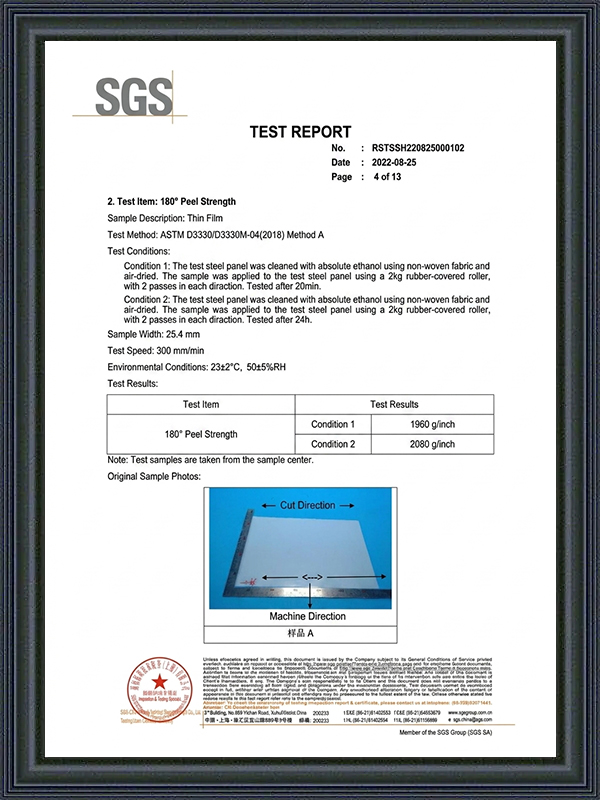
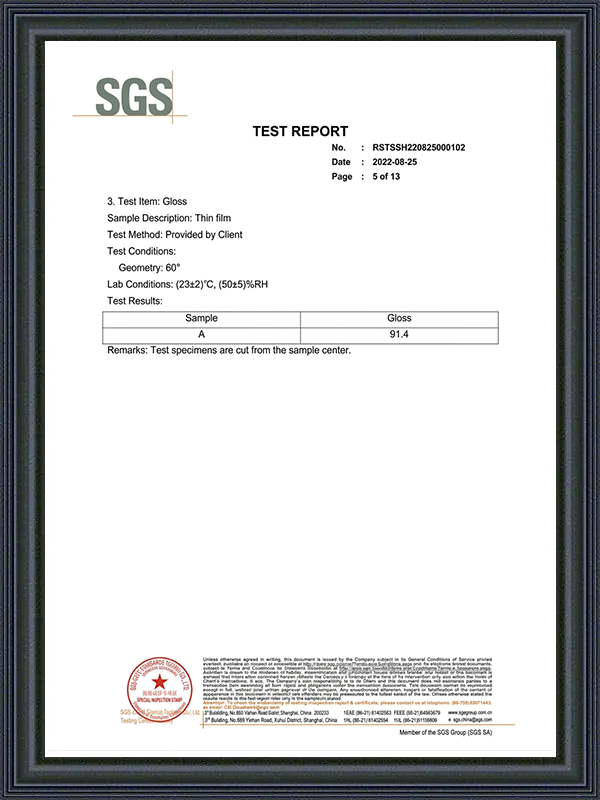
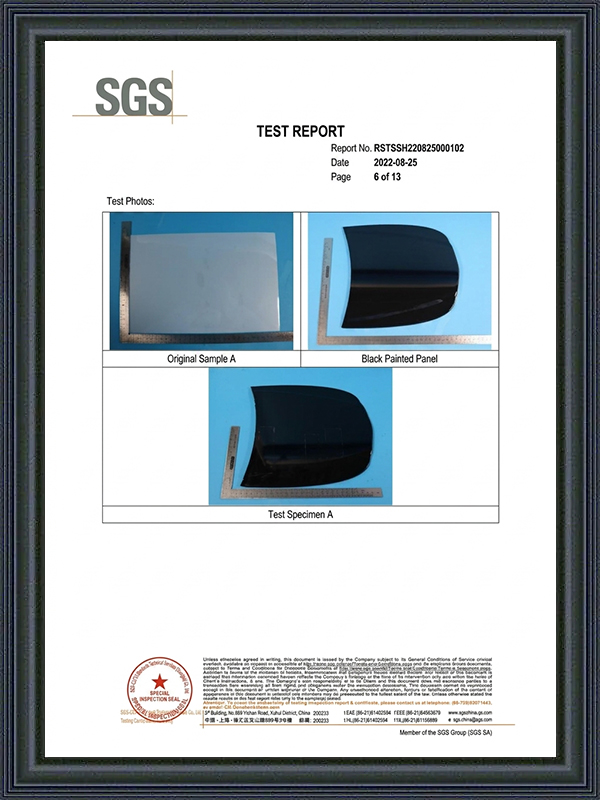
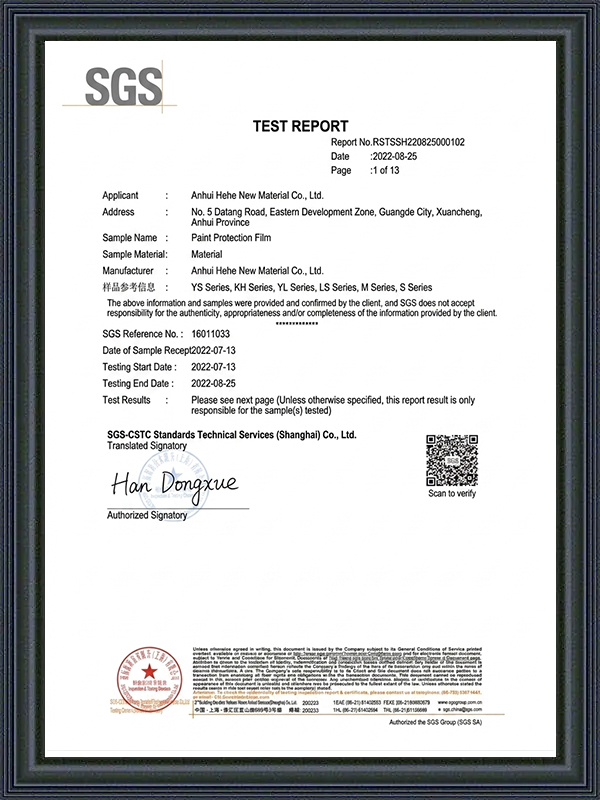
Natural-tone nano-ceramic film designed for true-color clarity.Hybrid original-color and nano-ceramic technology with superior UV protection, highheat rejection, and a lifes panfar beyond dyed films.
Nano Ceramic Automotive Window Film is engineered to deliver true-color clarity without distortion, preserving the original look of your vehicle’s glass and interior. It combines hybrid original-color technology with advanced nano-ceramic components, offering reliable, consistent performance for daily driving. The film provides strong UV protection to help shield occupants and reduce fading of upholstery and dashboards. It also delivers steady high-heat rejection to lower cabin temperature and ease the load on air conditioning. Unlike common dyed films, this nano-ceramic option resists discoloration, peeling, and bubbling, supporting a much longer service life and better long-term value. It maintains clear visibility day and night, does not interfere with electronic signals, and balances practical protection, visual comfort, and durability for everyday automotive use.
information to be updated
Industry Knowledge
The Selectivity Paradox: High VLT with Maximum IR Rejection
Traditional dyed films achieve darkness by absorbing visible light indiscriminately, which compromises nighttime driving visibility. Nano Ceramic Automotive Window Film relies on spectrally selective absorption, a fundamentally different physical mechanism. Anhui He He New Materials Co., Ltd., established in 2019, leverages its precision coating production platform to disperse nano-scale infrared-absorbing particles—typically antimony tin oxide or cesium tungsten bronze—within the functional coating formulation. These particles exhibit plasmonic resonance, meaning free electrons oscillate in response to specific near-infrared wavelengths, converting that solar energy into heat that dissipates outward while allowing visible light photons to pass through with minimal attenuation. The engineering challenge lies in maintaining dispersion stability: nano-particles inherently tend to agglomerate, which causes haze and reduces IR-blocking efficiency. As a direct manufacturer with complete in-house specialty adhesive R&D capability, HEHE controls the particle surface passivation chemistry, ensuring a Nano Ceramic Automotive Window Film can simultaneously deliver 70% visible light transmission and over 95% infrared rejection at 950nm without the characteristic blue haze that betrays inferior dispersion quality in the wholesale market.
Adhesive Edge Corrosion in High-Solar-Load Environments
A practical failure mode unique to Nano Ceramic Automotive Window Film is delamination initiating from the top edge, driven by concentrated thermal stress. Because the ceramic layer absorbs IR radiation and converts it to heat, the film edge adjacent to the glass frit band can reach temperatures exceeding 90°C on parked vehicles. Standard acrylic pressure-sensitive adhesives undergo chain scission under sustained heat-oxygen exposure, creating a creeping de-bonded margin colloquially called a "fingernail edge." Anhui He He New Materials Co., Ltd. addresses this within its full-industry-chain manufacturing platform by formulating a UV-stabilized, high-Tg adhesive layer. We incorporate hindered amine light stabilizers directly into the adhesive matrix during the specialty adhesive R&D phase rather than relying on post-coating migration from the film layers. This structural integration, impossible for simple converting factories, ensures the functional coating-to-glass interface remains optically clear and mechanically intact, preserving the seamless look of the installation even years into the vehicle's service life under aggressive desert sun exposure.
Low-Angle Haze and Off-Axis Optical Clarity
Total solar energy rejection values on a specification sheet do not reveal optical distortion experienced during real-world driving. When viewing through a windshield at an acute angle, poorly dispersed ceramic coatings scatter short-wavelength light, creating a "milky" veil that reduces pedestrian detection distance. Anhui He He New Materials Co., Ltd. quantifies this via ASTM D1003 haze measurements at multiple incidence angles rather than just normal incidence. Through our manufacturing platform originally developed for precision 3C electronics films, we control the refractive index matching between the nano-ceramic functional coating and the TPU or PET substrate. By minimizing interfacial Fresnel reflections within the film stack itself, HEHE ensures that our Nano Ceramic Automotive Window Film maintains low-angle clarity comparable to uncoated glass. This optical homogeneity is a direct outcome of our in-depth customization capability; we can tailor film thickness and coating refractive index to minimize the waveguide trapping effect that amplifies stray light scatter in lesser films used for automotive beauty applications.
Signal Attenuation: The Metallic vs. Ceramic Distinction
As vehicle connectivity becomes central to both the new energy battery ecosystem and autonomous driving, the electromagnetic compatibility of window films demands precise engineering. Sputtered metal films function as Faraday cages, attenuating GPS, 5G, and toll transponder signals by up to 30dB. Genuine Nano Ceramic Automotive Window Film from Anhui He He New Materials Co., Ltd. circumvents this because the functional coating contains semiconducting oxides rather than continuous conductive metal planes. However, a subtle interference risk persists: certain high-loading ceramic coatings create a dielectric loss tangent that can still degrade high-frequency signals at millimeter-wave frequencies. Within our specialized R&D for cutting-edge film solutions, we evaluate each batch for insertion loss across 600MHz to 40GHz bands. The list below details the critical parameters HEHE monitors as part of a true direct manufacturer's quality gate, which transcends simple visual acceptance:
- Sheet resistivity requirement for true ceramic films: Must remain above 10⁸ Ω/sq to guarantee no capacitive coupling with the vehicle's embedded antenna array.
- Coating uniformity tolerance: Localized thickness variations exceeding 5% in the IR-absorbing layer create resonant cavities that trap specific telecommunication frequencies, causing intermittent connectivity near tolling infrastructure.
- Interlayer dielectric constant matching: The functional coating formulation must maintain a dielectric constant below 3.5 across the entire X-band frequency range to ensure transparent passage for collision-avoidance radar signals when films are applied near sensor housings.
Differential Thermal Expansion Between Coating and Substrate
A construction-level challenge for Nano Ceramic Automotive Window Film is the micro-crazing that emerges months after installation in climates with rapid temperature cycling. The ceramic-loaded hardcoat and the polymer substrate possess different coefficients of thermal expansion. During a sudden cold-weather defroster blast on a frosty windshield, the ceramic layer cannot expand as quickly as the base film, inducing tensile cracks visible as a "spider web" pattern in reflected sunlight. Leveraging our full-industry-chain advantage, Anhui He He New Materials Co., Ltd. engineers a graded interface, not a sharp boundary, between these layers. We interleave an elastomeric buffer layer deposited inline during our precision coating production. This transitional zone acts as a compliant strain-relief layer. For contract manufacturing partners aiming to build differentiated brand competitiveness, we can tailor the modulus of this interlayer to match extreme thermal shock test criteria, guaranteeing that the wholesale TPU-based or PET-based clear film component remains free from stress-induced optical failure across the glass surface.
Nanoparticle Migration and Long-Term IR Stability
A critical failure pathway for undercooked Nano Ceramic Automotive Window Film is the slow migration of IR-absorbing nanoparticles into the adhesive layer, a phenomenon accelerating under combined UV and thermal loads. When cesium tungsten bronze nanoparticles lose their protective encapsulation and diffuse toward the glass interface, the film experiences a "purple shift" where the transmitted light takes on a pronounced blue-magenta cast while IR rejection simultaneously plummets. Anhui He He New Materials Co., Ltd., established in 2019 as a vertically integrated automotive films platform, mitigates this through a crosslinked sol-gel encapsulation matrix within the functional coating formulation. Rather than using simple surfactant-stabilized dispersions, we lock the nano-ceramics within a silica-titania hybrid network synthesized during the coating curing phase. The following table details the structural differences between conventional dispersed coatings and the encapsulated approach employed in our in-house system:
| Characteristic | Standard Surfactant Dispersion | HEHE Encapsulated Matrix System |
| Particle Mobility Under Heat | High (Surfactant desorption at 70°C+) | Near-zero (Covalent anchoring in sol-gel cage) |
| 1000-Hour QUV Color Shift (ΔE) | Typically > 5.0 (Visible to naked eye) | < 1.5 (Not noticeable by consumer) |
| Relevance for New Energy Battery Vehicles | Poor (Panoramic roof heat load degrades film fast) | Excellent (Stable thermal barrier for glass roofs) |
The Prowl Effect: Angular Dependence of Ceramic Color
Nano Ceramic Automotive Window Film does not typically exhibit the dramatic color travel of chameleon PPF, but it does possess a subtle "prowl effect" where the transmitted hue shifts when viewing through curved glass at oblique angles. This arises from angle-dependent scattering known as the Tyndall effect within the nano-ceramic dispersion. While often considered a defect, Anhui He He New Materials Co., Ltd. can engineer this property through our in-depth customization capabilities. By controlling the particle size distribution within a narrow 20–40nm window during the functional coating formulation stage, we dampen the scattering so that the glass retains a neutral grey or subtle blue tone regardless of the viewing geometry. Alternatively, for brands seeking a distinctive luxury signature, we can deliberately broaden the particle size distribution to introduce a controlled warm-to-cool color pivot when seen from driver versus passenger windows, creating a unique optical identity. This level of spectral sculpting is only achievable as a direct manufacturer with true full-industry-chain precision coating control.
Compatibility with Advanced Driver-Assistance Systems Inside the Cabin
Mounting toll readers or dashcams directly onto Nano Ceramic Automotive Window Film using suction cups introduces a localized deformation risk that degrades optical quality. The pressure-sensitive adhesive of a mount can plasticize the film's scratch-resistant hardcoat, causing a permanent ring indentation. Anhui He He New Materials Co., Ltd. has adapted its specialty adhesive R&D to formulate a higher crosslink-density hardcoat that resists plasticizer migration from external mounting adhesives. Additionally, we offer customization for a dedicated "mounting pad" section integrated during the precision coating production, where the top surface is textured at the micro-level to provide secure suction retention without degrading the underlying ceramic IR rejection layer. This reflects our comprehensive approach to providing cutting-edge film solutions for the automotive beauty and functional accessory industries simultaneously.
Integration with New Energy Vehicle Thermal Load Management
For electric vehicles, especially those with expansive panoramic glass roofs, cabin thermal management directly determines battery range because HVAC energy draw competes with propulsion. Nano Ceramic Automotive Window Film from Anhui He He New Materials Co., Ltd. functions as a passive heat rejection element. Our manufacturing platform produces films with total solar energy rejection exceeding 60% on glass, translating to a measured reduction in cabin soak temperature of 8–12°C. This significantly cuts the initial air-conditioning surge required at startup, extending range during summer months. Because we also serve the new energy battery industry directly, our film specifications include total hemispherical emissivity data, not just normal transmission figures. The table below outlines how our wholesale clear film and ceramic film parameters translate into tangible EV efficiency metrics, leveraging the insights from our cross-industry R&D platform:
| Performance Metric | Standard Dyed Film | HEHE Nano Ceramic Automotive Window Film |
| IR Rejection Mechanism | Absorption with no selectivity (Heats glass) | Plasmonic resonance (Energy reradiated outward) |
| Roof Glass Inner Surface Temp | High (Radiant heat burden on passengers) | Significantly lower (Comfort within inches of glass) |
| Customizable Range Efficiency Factor | No direct impact model available | Simulatable with HEHE thermal modeling data |
Post-Installation Dry-Out Time and Visual Mottling
Installers of Nano Ceramic Automotive Window Film frequently observe a transient "blushing" or mottled appearance during the first week, especially in high-humidity climates. This is water trapped in micro-voids within the adhesive layer during the wet application process coalescing into tiny optical lenses. Because ceramic films block IR heat that would normally drive out this moisture, they require longer dry-out periods than clear films. Anhui He He New Materials Co., Ltd. engineers the adhesive surface topography using a controlled-release liner imprint technique, creating microscopic channels that facilitate lateral water vapor escape toward the film edges. As part of our in-depth customization service for automotive beauty brands, we can adjust this channel density based on the target installation geography, ensuring a uniform crystal-clear finish within 48 hours rather than weeks, preventing premature customer complaints related to temporary haze.
-
 No. 5, Datang Road, East District, Development Zone, Guangde City, Xuancheng City, Anhui Province,242200, China
-
 [email protected]
-
 +86 18170340295
Copyright Anhui He He New Materials Co., Ltd. All Rights Reserved.
 Custom Nano Ceramic Automotive Window Film Suppliers