
 English
 русский
 Français
 Español
 Português
 Deutsch
 عربى

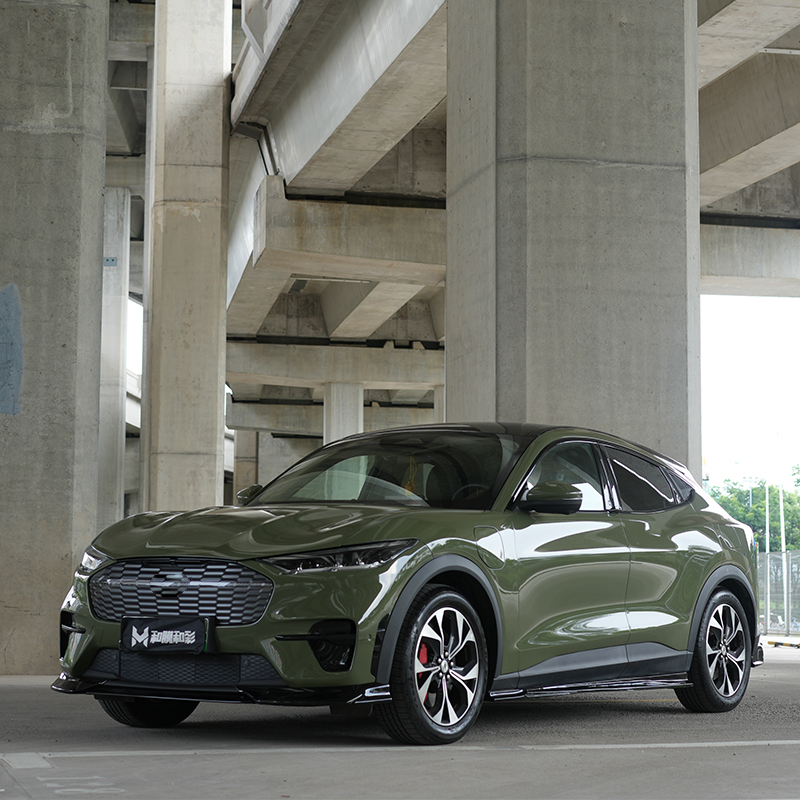
Foresland Army Green is a bold and commanding color change PPF that transforms your vehicle with the rugged, tactical aesthetic of military-grade gree...
See Details
Home / News / Industry News / A Practical Guide to auto film: Uses, Selection, and Key Considerations
A Practical Guide to auto film: Uses, Selection, and Key Considerations
Content
- 1 What Auto Film Means Across the Five Product Families
- 2 The Base Polymer, Not the Brand, Sets Service Life
- 3 Clear or Color PPF: Decide by Intent, Not by Price
- 4 Window Film: The Three Numbers That Decide the Result
- 5 A Six-Point Sourcing Checklist Before the First Cut
- 6 Frequently Asked Questions About Auto Film
Open three cartons of film labeled "TPU paint protection" from three suppliers and you will usually find three different products: one measures 0.15 mm with a low-tack adhesive, another reaches 0.19 mm but releases with a sticky residue, and a third yellows within eighteen months under the same sun. Auto film is a product category, not a specification, and the gap between a good roll and a cheap roll shows up on the vehicle two summers later.
This guide breaks the category down the way a buyer or an installer actually needs it: the five film families and what each one does, the material choices that drive service life, the numbers worth requesting in writing, and the checks that separate genuine TPU from a relabeled roll.
What Auto Film Means Across the Five Product Families
Auto film is a thin polymer sheet bonded to a vehicle surface, whether paint, glass, headlights or trim, in order to protect that surface, control heat and ultraviolet light, or change its appearance, and it is sold as five distinct product families rather than as one product.
Definition: auto film is a multi-layer polymer laminate made of a thermoplastic polyurethane (TPU) or polyester (PET) base, one or more functional coatings, and a pressure-sensitive adhesive, supplied in rolls from 0.025 mm to 0.20 mm thick and applied to painted panels, glazing or exterior components.
That definition matters commercially, because the five families behave nothing alike in installation, lifespan or price. Treating them as interchangeable in a quotation is one of the most common sourcing errors in the aftermarket business.
| Product family | Base material | Primary job | Typical thickness |
| TPU clear PPF | Aliphatic TPU | Impact, scratch and stain protection on paint | 0.15-0.20 mm |
| TPU color PPF | TPU plus a color layer | Color change with the same protective function | 0.15-0.19 mm |
| Automotive window film | PET | Heat, UV and glare rejection, glass retention | 0.025-0.10 mm |
| Automotive functional film | EPU or TPU | Windshield, headlight and sunroof protection | 0.10-0.20 mm |
| Architectural film | PET or multilayer | Building glass and furniture surface protection | 0.05-0.15 mm |
Only two of those five families normally use TPU. When a customer asks whether auto film is TPU, the accurate answer is that paint protection film usually is and window film almost never is.
The Base Polymer, Not the Brand, Sets Service Life
The base polymer determines how long an auto film survives sunlight, road salt and repeated washing, and aliphatic TPU outperforms PVC and TPH blends on every one of those measures.
Two rolls can both be printed with the letters TPU and still differ by a factor of five in real service life. Aliphatic TPU resists UV-driven yellowing because its hard segment contains no aromatic rings, and it recovers from light abrasion without external heat.
Aliphatic TPU
- Elongation at break commonly above 300 percent
- Self-healing at ambient temperature, no heat gun required
- No plasticizer, so minimal shrinkage and no adhesive residue on removal
- Realistic outdoor service life of 5 to 10 years
- Holds gloss through repeated wash cycles
PVC and TPH Blends
- Elongation usually between 150 and 200 percent
- Needs roughly 60 degrees Celsius or more to recover from a scratch
- Plasticizer migrates over time, causing shrinkage and edge lifting
- Realistic outdoor service life of 1 to 3 years
- Yellows visibly and can crack along panel edges
Specification check: if a supplier cannot state in writing whether the TPU is aliphatic or aromatic, and cannot give a nominal thickness tolerance such as plus or minus 0.01 mm, treat the TPU claim as unverified.
Clear or Color PPF: Decide by Intent, Not by Price
Clear PPF preserves the factory finish, while color PPF replaces it, and although both protect the paint underneath they answer different questions and carry different risk profiles.
Clear film is the right choice when the paint is original, undamaged and likely to matter at resale. A premium clear TPU film adds almost nothing visually while absorbing stone hits, bird droppings and wash marring, which is exactly what a lease return or a trade-in inspection rewards.
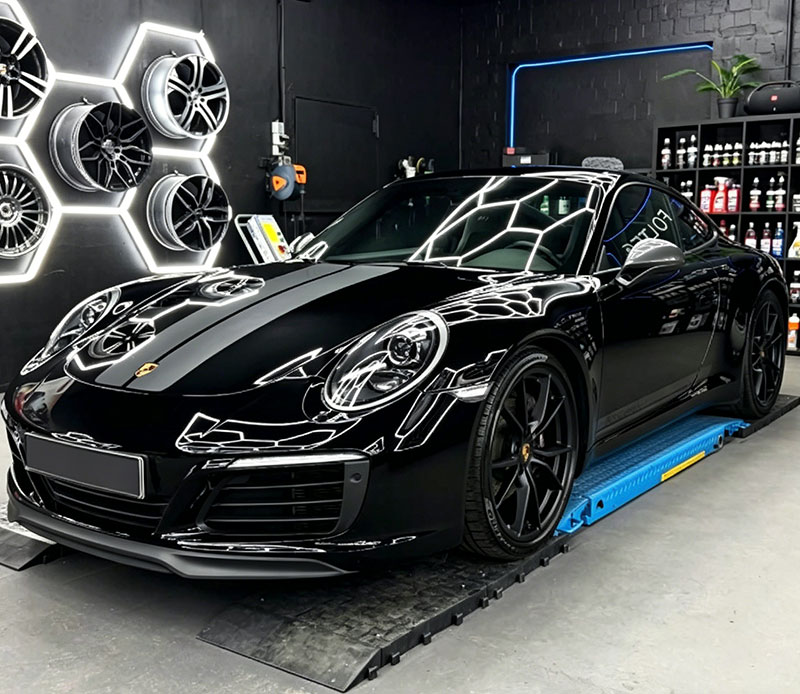 Premium TPU Clear Paint Protection FilmFor original paint on high-value vehicles, this nearly invisible film offers long-term protection and preserves resale value.View Product →
Color PPF is the right choice when the owner wants a new appearance and protection in a single operation. The color sits beneath the clear TPU topcoat rather than on top of it, which is what keeps the finish from washing out or chalking. The published crystal color PPF definition and performance data is a useful reference here, because it separates laminated color film from single-layer dyed film, a distinction that shows at the cut edges within a year.
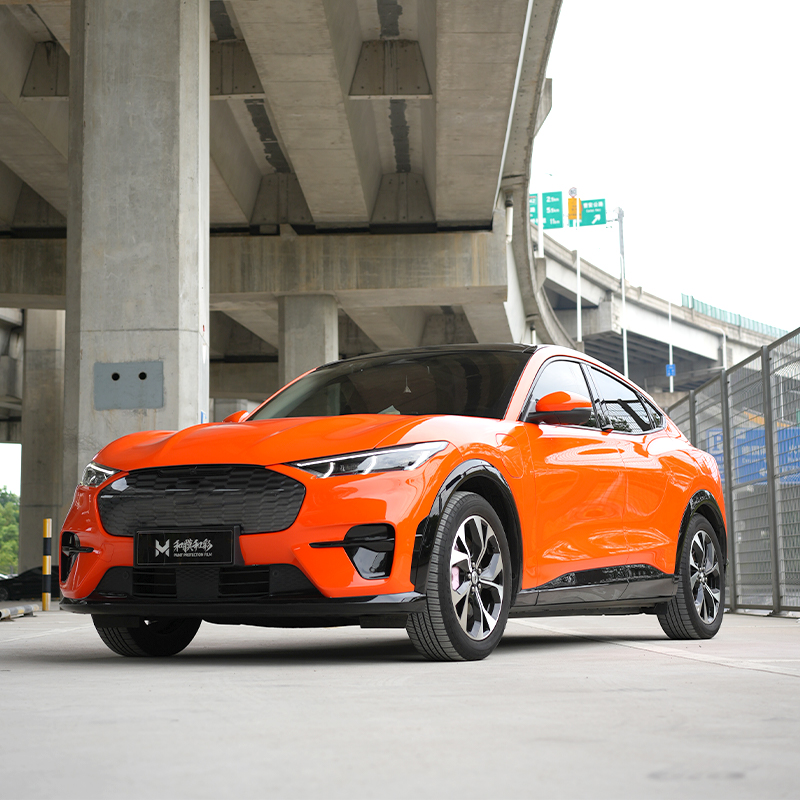 Crystal Color PPF for Color Change and ProtectionCombines vibrant color change with high-gloss paint protection, ideal for daily-driven vehicles seeking a fresh look and durable finish.View Product →
- Paint condition: original, unblemished panels are the best substrate for clear film, while a color film hides swirl marks but not dents or filler.
- Color tolerance: ask for batch-to-batch color difference below delta E 2.0 measured under D65 daylight, and keep a sample card from every batch you install.
- Panel geometry: deep recesses, sharp creases and textured plastic trim limit how far a film can be stretched before it lifts.
- Reversibility: a color film that cannot be removed cleanly is a paint repair waiting to happen, so confirm the adhesive system before quoting.
- Maintenance discipline: matte and satin finishes require pH-neutral shampoo and no automated brush washes, which has to be explained at handover.
Buyer note: a two-layer color film keeps the pigment under the topcoat, so the surface you touch is still clear TPU. A single-layer colored film is a different product with a much shorter life and a much weaker warranty position.
Window Film: The Three Numbers That Decide the Result
For automotive window film, three published numbers predict most of what the customer will feel: visible light transmission (VLT), total solar energy rejected (TSER), and ultraviolet rejection.
99%UV rejection
50-65%TSER, ceramic
20-70%VLT range
0.05 mmPET base
| Construction | Typical VLT | Typical TSER | UV rejection | Best fit |
| Nano ceramic | 15-70% | 45-65% | 99% | Everyday heat and glare control |
| Magnetron sputtering | 20-70% | 50-70% | 99% | Highest heat rejection per unit of visible light |
| Clear safety film | 70-90% | 20-35% | 99% | Glass retention on windshields |
| Iridescent film | 30-70% | 40-60% | 99% | Styling and fleet livery differentiation |
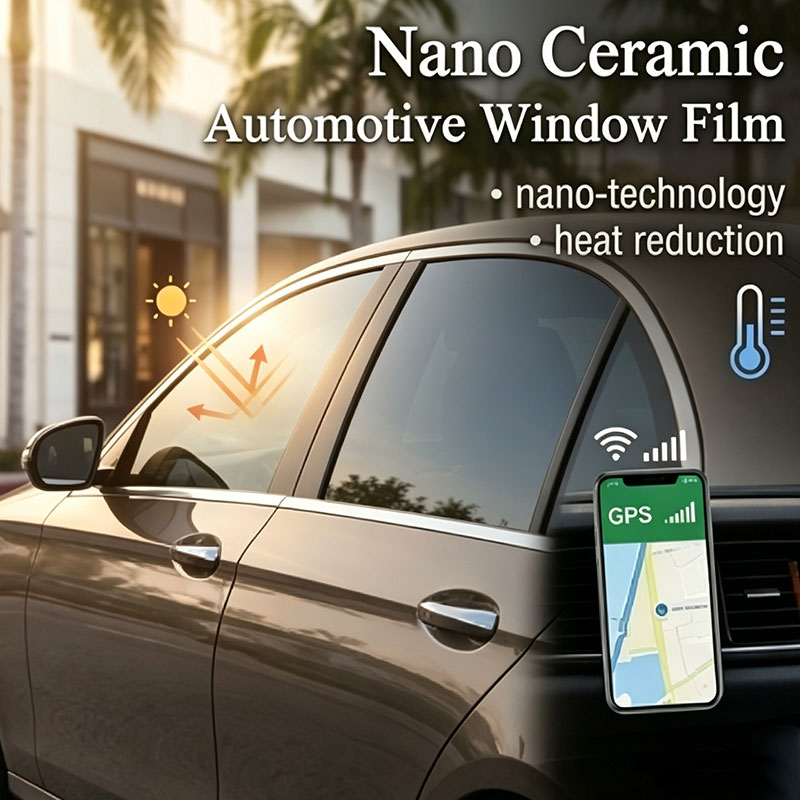 Nano Ceramic Automotive Window FilmProvides true-color clarity, high heat rejection, and UV protection without interfering with electronic signals, ideal for modern vehicles with ADAS.View Product →
The most common comparison error is putting an infrared rejection figure recorded at 950 nm next to a TSER figure and reading them as equivalent. Most manufacturers publish infrared rejection above 90 percent while TSER sits near 50 percent, and both numbers are honest, because they measure different parts of the solar spectrum.
Verification step: request a third-party test report listing VLT, TSER and UV rejection in the same document, measured on the same sample at the same thickness you are ordering. A number borrowed from another construction tells you nothing about the roll in your warehouse.
A Six-Point Sourcing Checklist Before the First Cut
A film order is a multi-year commitment rather than a consumable purchase, so six items should be confirmed in writing before the first plotter cut.
- Base polymer grade, stated as aliphatic TPU, aromatic TPU or PVC, together with the nominal thickness and tolerance.
- Adhesive system, meaning acrylic or rubber, plus the initial tack value in grams per 25 mm where the supplier can provide it.
- Batch consistency, expressed as color difference across rolls taken from the same production window rather than across the year.
- Self-healing recovery, measured as the time needed to close a 0.5 mm scratch at 25 degrees Celsius and again at 40 degrees Celsius.
- Converting behavior on your own equipment: roll width, release liner tension, and how the film cuts on the plotter you actually own.
- Warranty terms in writing, including exclusions for automatic brush washes and the documented claim procedure.
Almost all of those items reduce to one question, which is how much of the production chain the supplier controls directly. A manufacturer that coats, laminates and finishes film in house, the model the industry describes as a full-chain factory, can hold a batch tolerance that a trader sourcing from several anonymous coaters simply cannot. That is also why two rolls carrying identical labels can behave like two different products on the same car.
Order one test roll, install it on a single panel, and photograph that panel at 30, 90 and 180 days. One quarter of real exposure teaches you more than any specification sheet.
Frequently Asked Questions About Auto Film
How long does auto film last?
Paint protection film made from aliphatic TPU typically lasts 5 to 10 years on a garaged vehicle and 3 to 6 years on a vehicle parked outdoors year round. Interior-applied window film usually outlasts exterior paint film because it sees no abrasion, although rear windows with defroster grids are the most common failure point. PVC-based films often show yellowing or edge lifting within 1 to 3 years.
Is TPU always better than PVC?
For paint protection, yes. Aliphatic TPU beats PVC on elongation, UV stability and self-healing. For short-term styling work, or for a vehicle being sold within a year, a PVC film can still be a rational cost decision, provided the buyer understands the removal risk and the plasticizer residue it may leave on the paint.
Can a color change film go over an existing clear film?
Not reliably. Stacking two films doubles the edge thickness, traps moisture between the layers, and raises the chance that both films lift at the same time. Remove the old film, correct the paint surface, and apply the new film directly to the panel.
How can I tell whether a film is genuine TPU?
Three quick checks. Stretch a sample, because TPU passes 300 percent elongation without whitening while PVC tears earlier. Warm a scratched sample to about 40 degrees Celsius and watch whether the scratch closes. Then ask for the base polymer grade in writing. A film that fails any of those checks is not a film you should quote a five-year warranty on.
The short version: auto film is five product families, not one. Base polymer grade drives lifespan, published VLT, TSER and UV figures drive window film performance, and batch consistency is what separates a factory from a reseller.
Related products
-
-

Experience the breathtaking luminescence of the Aurora Green Chromis TPU Color PPF — a spectacular film inspired by the ethereal dance of the Northern...
See Details -
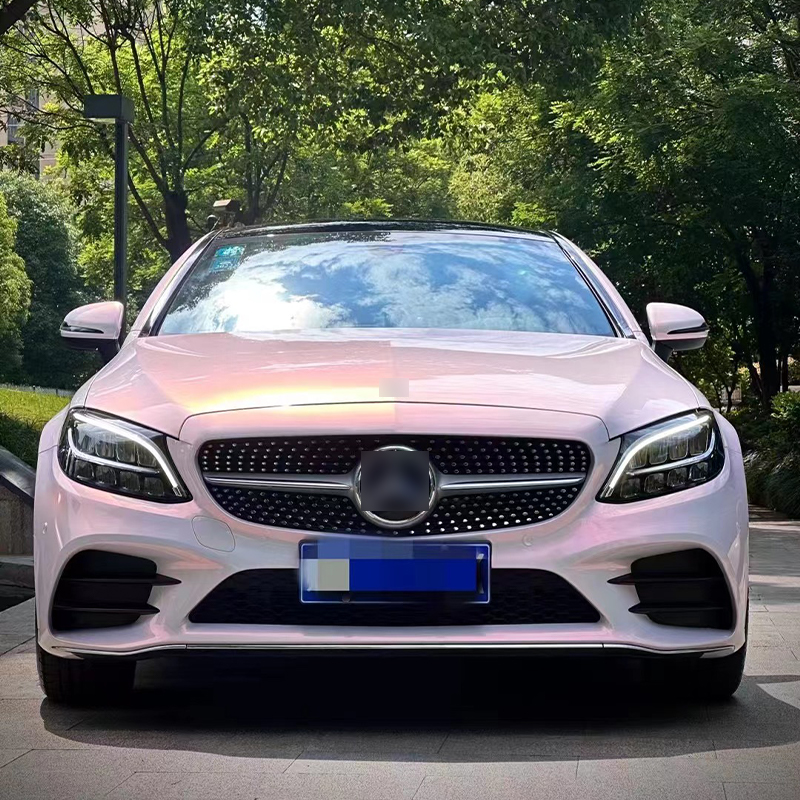
Dreamy Volcanic Ash is a dual-color chameleon TPU paint protection film offering a poetic, otherworldly color palette inspired by the soft grey-purple...
See Details -

Achieve an extraordinary industrial aesthetic with the Matte Aluminum Mercury TPU Color PPF — a revolutionary ultra-matte film that pairs the cool, re...
See Details
GET THE LATEST QUOTATIONS
-
 No. 5, Datang Road, East District, Development Zone, Guangde City, Xuancheng City, Anhui Province,242200, China
-
 [email protected]
-
 +86 18170340295
PRODUCTS
MOBILE WEB
Copyright Anhui He He New Materials Co., Ltd. All Rights Reserved.
 Wholesale TPU PPF Film Automotive TPU PPF Manufacturer