
 English
 русский
 Français
 Español
 Português
 Deutsch
 عربى

GT Silver Racing Metallic Car Wrap Film embodies the classic, timeless spirit of motorsport heritage. Inspired by the legendary silver racing liveries...
See Details
Home / News / Industry News / Clear Car Wrap: Applications, Selection Criteria, and Practical Guidance
Clear Car Wrap: Applications, Selection Criteria, and Practical Guidance
Content
- 1 What a Clear Car Wrap Actually Is
- 2 TPU, PVC and Hybrid Film: What the Resin Decides
- 3 What a Clear Wrap Handles and What It Will Not
- 4 Four Numbers Worth Checking Before You Buy
- 5 Price Bands and What Actually Moves Them
- 6 Installation: What a Competent Process Looks Like
- 7 Care and Realistic Service Life
- 8 Buying Clear Film at Volume
- 9 Clear Car Wrap Questions, Answered
A full-body clear wrap on a mid-size sedan uses roughly 15 to 18 square meters of film. A partial front-end job uses about 6. The film is the cheap half of that equation. What separates a 1,600 USD clear bra from a 5,000 USD one is almost always base resin chemistry, adhesive class, and the hours a trained installer spends on surface preparation.
What a Clear Car Wrap Actually Is
A clear car wrap is an unpigmented urethane film bonded to painted panels so that road debris, wash marring and UV exposure hit the film instead of the paint.
The material is usually sold as paint protection film, PPF or clear bra. A typical construction stacks four layers: a clear topcoat that carries the self-healing chemistry, a TPU base film 150 to 200 microns thick, an acrylic pressure-sensitive adhesive, and a PET release liner. Thickness alone tells you very little. A 180 micron film with a thin topcoat will mar and stain faster than a 150 micron film with a properly crosslinked topcoat.
Definition
Clear car wrap: a transparent, self-adhesive thermoplastic polyurethane sheet applied to painted body panels to absorb impact and abrasion, expected to stay serviceable for 5 to 10 years and to be removed without lifting factory paint.
It is not a vinyl colour wrap and not a ceramic coating. Vinyl changes appearance, lasts three to five years and is not built for impact. A ceramic coating is a nanometre-scale layer that adds gloss and makes washing easier, but it does nothing against a stone at highway speed.
TPU, PVC and Hybrid Film: What the Resin Decides
The base resin decides most of what a clear wrap can and cannot do: TPU stretches and recovers, PVC creases and yellows, and hybrid constructions land somewhere in between depending on how much urethane the topcoat really contains.
| Property | Cast TPU | Calendered PVC | Hybrid TPU blend |
| Elastic recovery | High, returns to shape after stretch | Low, creases stay visible | Moderate, depends on blend ratio |
| Self-healing topcoat | Standard on quality grades | Rarely present | Usually thin or absent |
| Yellowing after three summers | Minimal with UV-stable topcoat | Visible shift on light colours | Noticeable on white and silver |
| Typical service life | 5 to 10 years | 1 to 3 years | 3 to 5 years |
| Full-front material cost | High | Low | Mid |
| Best fit | Daily drivers, high-value paint | Short-term cover only | Budget fleets and trade-ins |
Field checks beat brochures. A genuine TPU film stretches past 200 percent before it tears and recovers when released; a PVC sample tears at the edge of the stretch and leaves a white stress line. Our guide to telling genuine TPU from blended film walks through the stretch, burn and stain tests in more detail.
What a Clear Wrap Handles and What It Will Not
A clear wrap absorbs the energy of road debris roughly up to the size of a pea; anything larger transfers through the film and dents or chips the panel underneath.
Handles well
- Stone chips thrown from tyres ahead at highway speed
- Parking-lot scuffs on bumper corners and mirror caps
- Bird dropping etching if cleaned within a day
- UV fade on red, black and other unstable pigments
- Wash marring on soft factory clear coats
Will not prevent
- Dents that deform the metal panel beneath
- Deep key scratches that cut through film and paint
- Existing rust, blistering or failing clear coat
- Collision damage or panel misalignment
- Paint failure caused by poor preparation under the film
A clear wrap is a sacrificial layer, not a force field. It deforms so the paint does not have to.
In practice, film earns its money on bumper covers, hood leading edges, mirror caps, A-pillars and rocker panels, which take most of the debris. On a daily driver, covering the full hood matters more than covering the roof.
Four Numbers Worth Checking Before You Buy
Thickness, elongation, gloss and accelerated UV hours tell you more about a clear wrap than any marketing claim, and all four should appear on the supplier data sheet.
150-200Micron total thickness
200%+Elongation at break
90+Gloss units at 60 degrees
1500 hMinimum QUV exposure
- Adhesive class: acrylic adhesives resist yellowing and release cleanly; cheap rubber adhesives grab hard and leave residue after five years.
- Topcoat construction: ask whether the self-healing layer is a separately coated film or an additive dispersed in the base resin.
- Release liner: a PET liner keeps the adhesive flat; paper liners wrinkle and print texture into the film.
- Roll width and cut method: 1.52 m rolls suit plotters, while bulk cutting saves film but demands a confident installer.
- Warranty wording: a real warranty names yellowing, bubbling, cracking and edge lift, and states who pays for labour.
Gloss is measured in gloss units at 60 degrees. A film reading 92 GU when new and 88 GU after two years is doing its job. One that falls to 78 GU has a topcoat problem, not a washing problem.
Price Bands and What Actually Moves Them
Clear wrap pricing runs from about 700 USD for a partial front to 7,000 USD for a full body, and roughly two thirds of that spread is labour and coverage rather than film cost.
Partial front 1,500-2,500
Bumper, half hood, half fenders and mirrors. The value pick for leased cars and daily commuters.
Full front 2,500-4,000
Full hood, full fenders, bumper, mirrors and headlights. Most common on new performance cars.
Full body 4,500-7,000
Every painted panel including doors and roof. Film volume and disassembly drive the number.
Several factors move a quote more than the film grade:
- Coverage pattern: hand-cut bulk film wraps more edges than a plotter pattern, and it costs more hours.
- Disassembly: removing door handles, badges and lights adds labour but removes visible seams.
- Installer experience: a crew that has fitted 500 cars finishes faster and wastes less film.
- Regional labour rates: the same job can differ by 30 percent between two cities.
Quotes that sit 40 percent below the local average usually remove something: pattern coverage, panel disassembly, post-heating, or the warranty.
Installation: What a Competent Process Looks Like
Most clear wrap failures are installation failures, and they appear as lifted edges, trapped moisture and silvered adhesive within the first six months.
- Wash, decontaminate with clay, then wipe with an IPA mix; any wax left on the panel ends up trapped under the adhesive.
- Measure and plot with 10 to 15 mm of bleed on every edge, or bulk-cut with enough overlap to wrap the edge behind the panel.
- Apply slip solution, position the film, then squeegee from the centre outwards in overlapping strokes at about 45 degrees.
- Heat-tack the edges and wrap them behind the panel wherever possible; an edge that stops on a visible surface will catch.
- Post-heat the film to 60 to 70 C to activate the adhesive and relax the memory of the stretch.
- Inspect under LED light for silvering, contamination and stretch marks, then hold the car for 24 hours before handover.
Cure time matters. No washing, no pressure washer and no highway following for the first 48 hours; full adhesion takes about 7 days at 20 C.
Care and Realistic Service Life
A TPU clear wrap fitted properly lasts 7 to 10 years on a garaged car and 5 to 7 years on a car that lives outdoors, and the first failure is nearly always an edge.
- Wash by hand or use a touchless system, and keep a pressure washer nozzle at least 30 cm away from every edge.
- Remove bird droppings and insect remains within a day; the acids stain a topcoat long before they reach paint.
- Skip wax on matte film and use a matte-specific sealant if you want water beading.
- Do not polish self-healing film with a rotary buffer; heat and abrasion defeat the topcoat.
- Check edges after every winter. A 2 mm lift can be trimmed and re-tacked in minutes, while a 10 mm lift means a panel redo.
Film left on a car for more than 10 years becomes harder to remove, and on a repainted panel that risk passes to whoever pulls it off.
Buying Clear Film at Volume
For shops and distributors, batch consistency matters more than any single headline spec, because colour drift, adhesive tack variation and topcoat thickness scatter cause more comebacks than a lower gloss number.
Our production runs from resin and coating through lamination on one site, which is what a full-chain automotive film factory means in practice: one process owner for the topcoat, the base film and the adhesive, and one batch record when something goes wrong.
The clear range splits into three practical tiers for most resale and install programmes:
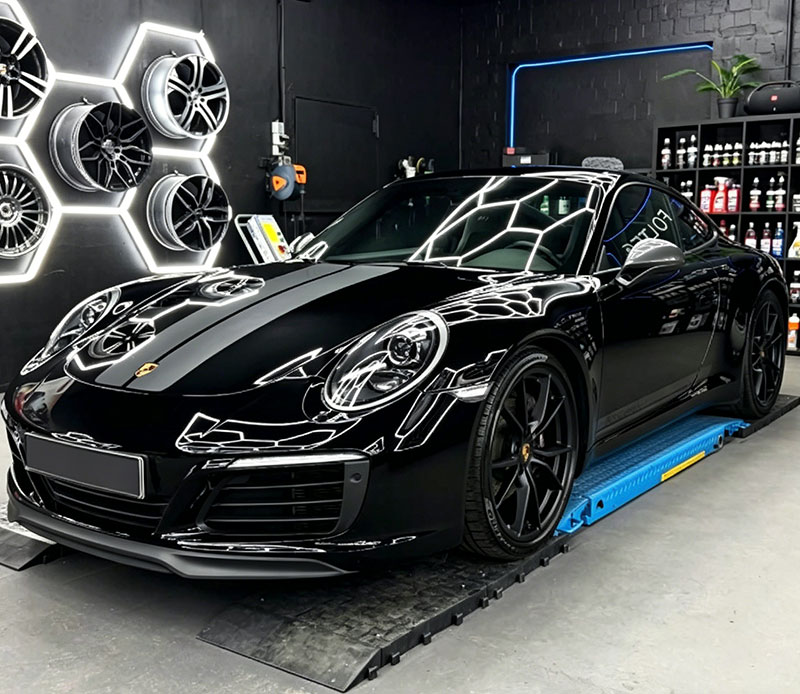 Premium TPU Clear Paint Protection Film for High-Value VehiclesA high-clarity clear PPF tier for high-value vehicles, offering durable paint protection and an 8–10 year warranty for resale and install programmes.View Product →
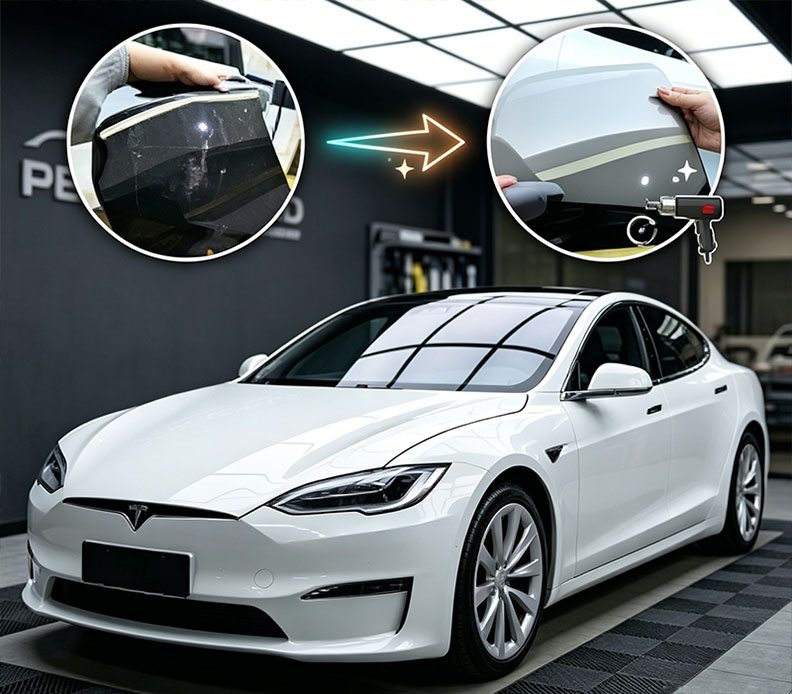 Instant Self-Healing TPU Clear Paint Protection FilmA clear PPF tier that recovers fine scratches at ambient temperature, with hydrophobic stain resistance and 5–8 year warranty for resale and installation programmes.View Product →
 Matte TPU Clear Paint Protection FilmA satin-matte PPF tier for vehicle exteriors, combining durable matte finish, self-healing top coat, and stain resistance for resale and install programmes.View Product →
Before a container order, audit the paperwork as carefully as the sample:
- Certificate of analysis per batch covering thickness, peel adhesion, haze and gloss.
- QUV or xenon arc report with at least 1,500 hours of exposure data.
- Roll width, length and core size, plus MOQ and lead time per finish.
- Written warranty terms that name a responsible party in your market.
- A sealed, dated retained sample from each batch for dispute resolution.
Sample rolls are cheap; a container of film that yellows in 18 months is not. Test the second batch as carefully as the first.
Clear Car Wrap Questions, Answered
Short version: a clear wrap is worth fitting on a car you plan to keep, on paint in good condition, and on the panels that take debris. It is rarely worth fitting over failing clear coat.
How long does a clear car wrap last?
Seven to ten years on a garaged car and five to seven years on a car parked outdoors. Matte films and cars that see daily highway use sit at the lower end, and edges always fail before the centre of a panel does.
Can I wash the car normally after a clear wrap?
Yes, once the film has cured for about seven days. Hand washing with a pH-neutral shampoo is safest, brush tunnels and stiff bristles should be avoided, and a pressure washer should never be aimed directly at an edge.
Does removing a clear wrap damage paint?
Removal from healthy factory paint is routine: warm the film to around 60 C with a heat gun, peel slowly at a shallow angle and let the adhesive come with the film. Risk rises on repainted panels, on paint with existing stone chips, and on film left in place beyond ten years.
Is a clear wrap better than a ceramic coating?
They solve different problems. A ceramic coating adds gloss and makes washing easier but has no impact resistance, while film absorbs chips and scratches. Many owners fit film on the front end and coat the remaining panels.
Related products
-

-
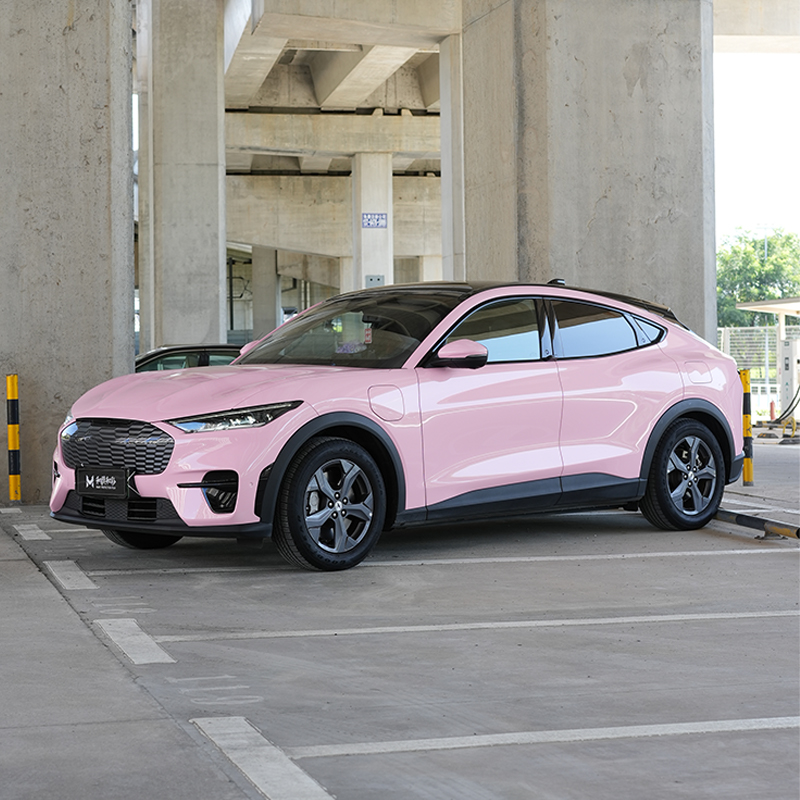
Lolita Pink Candy Crystal TPU Wrap Film is a celebration of sweetness, femininity, and playful luxury. Inspired by the delicate, candy-like aesthetics...
See Details -

Metallic Velvet Purple Crystal Pearl Car Wrap combines the sensual richness of velvet with the brilliance of crystal pearl in a deep, complex purple m...
See Details -
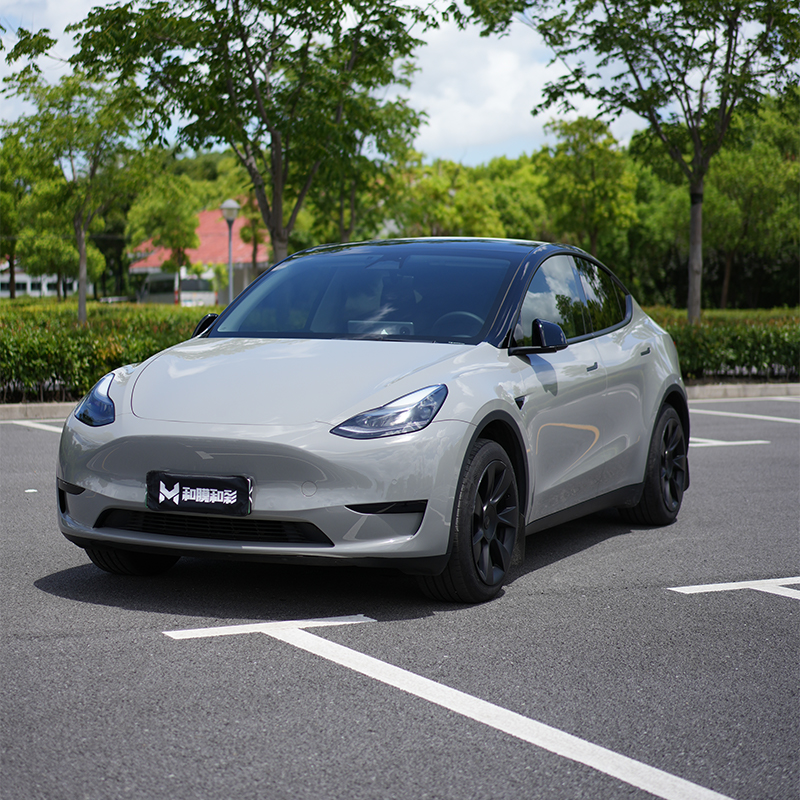
Matte Grey Satin Finish TPU Car Wrap Film presents a versatile, sophisticated grey in an elegant satin finish that bridges full matte and high gloss. ...
See Details
GET THE LATEST QUOTATIONS
-
 No. 5, Datang Road, East District, Development Zone, Guangde City, Xuancheng City, Anhui Province,242200, China
-
 [email protected]
-
 +86 18170340295
PRODUCTS
MOBILE WEB
Copyright Anhui He He New Materials Co., Ltd. All Rights Reserved.
 Wholesale TPU PPF Film Automotive TPU PPF Manufacturer