
 English
 русский
 Français
 Español
 Português
 Deutsch
 عربى

Lolita Pink Candy Crystal TPU Wrap Film is a celebration of sweetness, femininity, and playful luxury. Inspired by the delicate, candy-like aesthetics...
See Details
Home / News / Industry News / Ceramic Nanotechnology Explained: Materials, Properties, and Film Uses
Ceramic Nanotechnology Explained: Materials, Properties, and Film Uses
Content
- 1 What Ceramic Nanotechnology Actually Means
- 2 Why Nanoscale Ceramics Behave Differently
- 3 How Nanoceramics Are Structured
- 4 Where Ceramic Nanotechnology Appears in Window Film and Coatings
- 5 Specs That Separate Real Nano-Ceramic Film from Marketing
- 6 The Manufacturing Reality: Dispersion, Coating and Failure Modes
- 7 How to Vet a Ceramic Film Supplier
- 8 Questions Buyers Ask About Ceramic Nanotechnology
A film rep opens a sample book and the same phrase appears on nearly every page: nano ceramic. The swatch underneath is a coated polyester sheet a few dozen microns thick, and the one thing separating a durable sheet from a cheap one is how the ceramic phase was built into it.
Two films can carry identical marketing language and still differ by twenty percentage points of total solar energy rejection, by a visible haze level, and by several years of colour stability. The real variables are particle size, dispersion quality, loading level, and the binder chemistry holding everything together.
Working definition
Ceramic nanotechnology is the design and dispersion of ceramic materials whose grains or particles measure roughly 100 nanometres or less, so that hardness, optical transmission and infrared absorption are governed by size and interface effects rather than by bulk chemistry alone.
What Ceramic Nanotechnology Actually Means
Ceramic nanotechnology is the engineering of ceramic materials at feature sizes between about 1 and 100 nanometres, where particle size and interface area become the dominant design variables.
In bulk form, ceramics such as alumina, zirconia, titania and indium tin oxide are hard, heat resistant and usually opaque or strongly light scattering. Mill the same chemistry below the wavelength of visible light and a dispersion of it can be coated onto a film as a transparent layer that still absorbs strongly in the near infrared.
Most industrial work happens inside nanocomposites, where a nanoscale ceramic phase is embedded in a matrix. Three families matter commercially:
- Nanoceramic matrix composites. Ceramic nanoparticles or nanofibres inside a ceramic matrix, used where wear resistance and thermal stability outrank cost.
- Metal matrix composites. Ceramic nanoparticles dispersed in aluminium or another metal, mainly to raise stiffness and wear life without adding much weight.
- Polymer matrix composites. Ceramic nanoparticles in a resin or adhesive binder. This is the family behind solar control film, hard coats and clear paint protection top layers.
Nano describes a size regime, not a performance grade. Two ceramics measured at the same 100 nanometres can behave like completely different materials.
Why Nanoscale Ceramics Behave Differently
At the nanoscale a ceramic gains surface area far faster than it gains mass, and that single fact drives most of the change in optical, thermal and mechanical behaviour.
A 100 nm particle carries roughly one hundred times the specific surface of a 10 micron particle of the same chemistry. More interface means more sites where light interacts, where sintering begins, and where a resin can bond chemically rather than only mechanically.
Light scattering is the part buyers feel directly. Scattering intensity climbs steeply as particle diameter grows, so a well dispersed 60 nm ceramic stays clear while a 300 nm agglomerate of the same material turns the film milky under low sun. Haze is usually a dispersion failure, not a chemistry failure.
100 nmSize threshold where a ceramic is commonly classed as nano
100xSpecific surface gain, 100 nm particle versus 10 micron particle
1/10Particle to wavelength ratio that keeps visible scattering low
Haze is the first thing a driver notices and the last thing a supplier wants to measure. A one percent film and a three percent film can look identical on a datasheet and completely different through a windscreen at night.
How Nanoceramics Are Structured
Commercial nanoceramics are organised into four structural families, and each one maps to a different manufacturing route and a different cost base.
The distinction matters during sourcing, because a supplier quoting a nanoparticle dispersion and a supplier quoting a nanofibre mat are offering two unrelated products even though both use the same vocabulary on the front page of the brochure.
| Structure | Typical chemistry | What it delivers | Where it shows up |
| Ceramic nanoparticle dispersion | Indium tin oxide, antimony tin oxide, caesium tungsten oxide, titania | Transparent near-infrared absorption | Solar control and automotive window film |
| Nanoceramic matrix composite | Alumina-zirconia, silicon carbide | Wear resistance, thermal stability | Cutting tools, seals, thermal barriers |
| Ceramic nanofibre mat | Alumina, silica | High porosity with mechanical integrity | Filtration, insulation, battery separators |
| Nanoceramic thin coating | Silica, zirconia, alumina | Scratch resistance and barrier performance | Hard coats, top layers of paint protection film |
In film, the ceramic phase is almost never a solid layer. It is a dispersion of a few weight percent that has been milled, stabilised against settling, and coated to a controlled wet thickness before drying.
Where Ceramic Nanotechnology Appears in Window Film and Coatings
In automotive and architectural film, ceramic nanotechnology is used to build infrared absorbing layers that contain no metal, which keeps the film signal transparent and colour stable over time.
The particles absorb in the 800 to 1200 nm band and release the energy as low grade heat that the glass, frame and cabin air then dissipate. Because the layer is dielectric rather than metallic, it does not reflect like a mirror, does not oxidise at the edges, and does not attenuate the radio frequencies your phone, GPS or toll tag rely on.
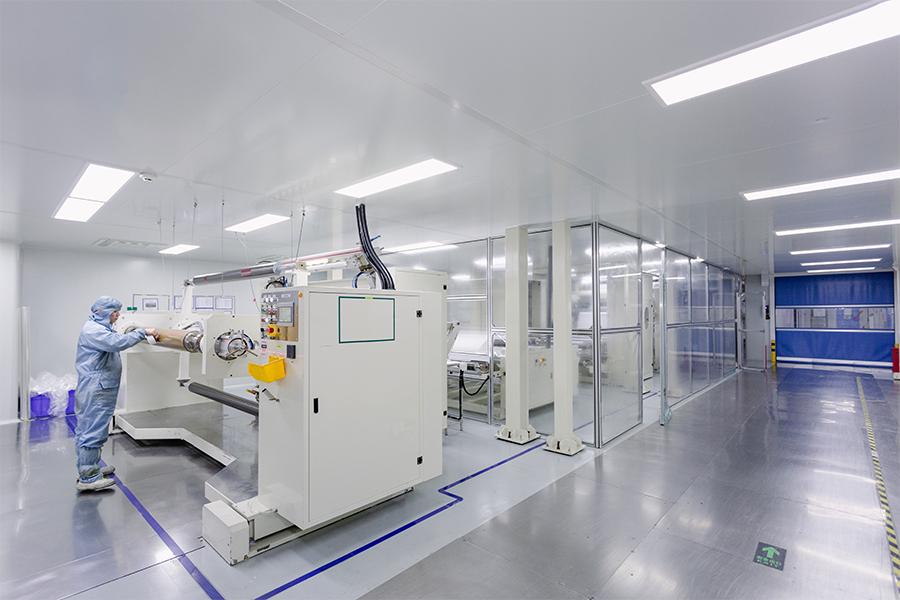 Nano Ceramic Automotive Window FilmDielectric nano-ceramic film for automotive glass, offering UV protection, heat rejection and signal-friendly clarity without metallic reflection.View Product →
The trade against sputtered metal film is real, and it is worth stating plainly rather than selling one route as universally better.
Ceramic absorptive layer
- No signal interference for mobile, GPS or toll systems
- Colour holds up because the layer does not corrode
- Absorbed heat re-radiates, so glass temperature can rise
- Lower visible reflectance, closer to clear glass
Metal sputtered layer
- Higher total solar rejection per unit of visible light
- Reflective appearance that some buyers specifically want
- Can attenuate in-car signal reception
- Edge corrosion risk in humid coastal climates
Same ceramic phase, different specification. A windscreen film is tuned for visible light transmission above 70 percent, while an architectural film is tuned for solar rejection above 50 percent with a neutral grey tone, and the dispersion recipe changes between the two.
On buildings the requirement shifts again. Ceramic layers keep the glass visually neutral so tenants do not read the facade as tinted, while rejecting enough solar gain to reduce cooling load on west facing elevations.
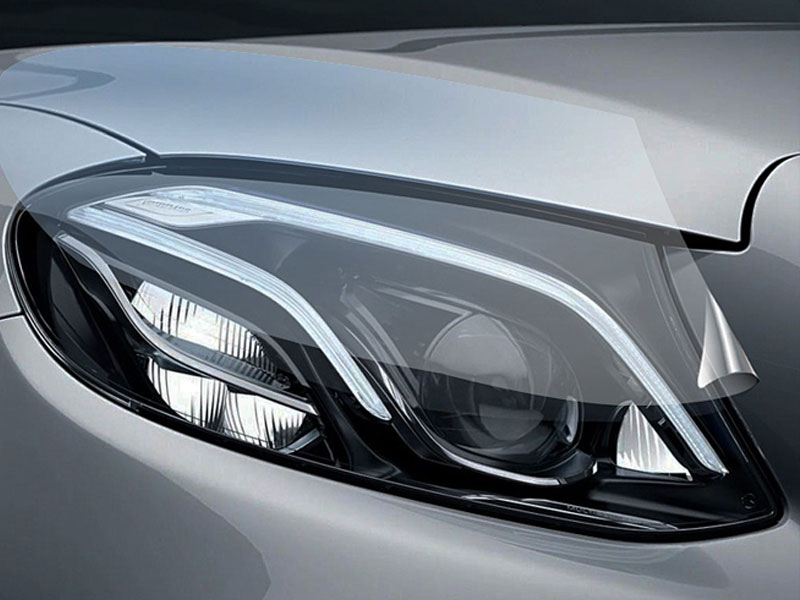 Architectural Solar-Control and Safety Window FilmSputtered architectural film for residential and commercial glazing, combining heat rejection, UV protection, glare reduction and post-breakage safety with neutral optical clarity.View Product →
Specs That Separate Real Nano-Ceramic Film from Marketing
Four numbers decide whether a ceramic film performs: visible light transmission, total solar energy rejected, infrared rejection at a stated wavelength band, and haze.
Every one of them can be measured on a finished laminate in under ten minutes with a spectrophotometer and a haze meter. If a supplier only publishes one figure, that figure is the one they are least worried about.
| Metric | What it measures | Typical range | What to verify |
| VLT | Visible light passing through the laminate | 5 to 70 percent | Measured to a named standard and consistent across batches |
| TSER | Total solar energy rejected across UV, visible and infrared | 35 to 60 percent | The only figure that predicts cabin or room heat |
| IRR | Near-infrared rejection at a stated band | 85 to 99 percent at 900 to 1000 nm | The wavelength band must be declared with the number |
| UV block | Ultraviolet rejection up to 380 or 400 nm | 99 percent typical when new | Measured after weathering, not only on a fresh sample |
| Haze | Light scattered rather than transmitted | Below 1 percent for good film | Testing at low sun angles and at night |
An infrared rejection figure without a wavelength band is marketing, not a specification. Values taken at 900 nm and at 1400 nm describe two different products from the same factory.
The Manufacturing Reality: Dispersion, Coating and Failure Modes
Ceramic film performance is decided in four process steps, and each step has a characteristic failure mode that shows up in the field months or years later.
- Milling and dispersionAgglomerates are broken down to a median particle size below roughly 80 nm, then stabilised with a dispersant so the particles do not re-cluster. Failure mode: haze that appears as a blue-grey milkiness, plus settling in the coating tank.
- Wet coatingThe dispersion is applied to polyester at a controlled wet thickness and dried through a graded oven so the binder skins evenly. Failure mode: striping and mottling across the web, and a ceramic loading that drifts from roll to roll.
- Lamination and cureAdhesive and liner are bonded without yellowing the binder or stressing the ceramic layer. Failure mode: adhesion loss and edge lift after thermal cycling in a hot climate.
- Quality control and weatheringHaze meter, spectrophotometer and accelerated exposure run on production lots. Failure mode: delayed colour shift and micro-cracking that only surfaces after two summers on a car roof.
A ceramic layer at high loading is harder to keep flexible. The engineering trade sits between infrared absorption and elongation, and it gets settled in the binder system rather than in the particles.
How to Vet a Ceramic Film Supplier
Ask for dispersion data, haze measurements and weathering results before you ask for a price, because a supplier who cannot produce the first three cannot protect the fourth.
- Particle size distribution for the ceramic dispersion, with median and upper percentile both stated.
- Haze and clarity measured on the finished laminate rather than on the wet coating alone.
- Accelerated weathering hours with the standard used and the colour shift recorded afterwards.
- Adhesive and liner specification, shelf life, and recommended storage temperature.
- Batch-to-batch colour tolerance expressed as a number, not as a promise.
The more useful question for a converter is whether the supplier controls the whole chain. A vertically integrated factory that mills its own dispersion and coats its own film can hold tighter tolerances than one that buys finished coated rolls and re-laminates them. The R and D center and the quality programme are the two places where that control should be documented in writing.
Request samples from the same production lot as the quotation. Films that match perfectly on paper regularly differ by two or three colour units across lots, and that difference is what the customer sees on the car.
Questions Buyers Ask About Ceramic Nanotechnology
Is ceramic nanotechnology the same as a ceramic coating?
No. A ceramic coating is a liquid product applied and cured on a painted surface, usually silica based. Ceramic nanotechnology in film refers to inorganic particles dispersed inside a polymer layer during manufacturing. The two share chemical vocabulary but not process, thickness or durability model.
Do nano-ceramic films block phone, GPS or toll signals?
Generally not, because the ceramic layer is dielectric rather than metallic. Metal sputtered films are the ones that can attenuate radio frequencies. If signal transparency is critical for your market, ask for a comparison test on the specific laminate rather than relying on a claim.
How long does the ceramic phase stay effective?
The inorganic particles themselves do not degrade. The binder around them does. A realistic service life is 5 to 10 years for automotive film and 10 to 15 years for architectural film, and colour shift or rising haze is the first sign the binder is aging, not the ceramic.
Are ceramic nanoparticles a health concern during manufacturing?
Airborne nanoparticle dust is a genuine handling issue, which is why industrial lines process the ceramic phase as a wet slurry rather than a dry powder, and why ventilation and dust monitoring belong in the process specification. In the finished film the particles are bound inside a cured polymer matrix.
The word nano costs nothing to print. The dispersion behind it is where the money, the equipment and the quality control actually sit.
Related products
-
-

Pearlescent Silk White Ceramic Pearl TPU Film achieves the purest, most refined expression of white in automotive film technology. Inspired by the sil...
See Details -

Crystal Ceramic Blue is a stunning color change PPF that channels the cool, refined beauty of fine ceramics into your vehicle's exterior. This mesmeri...
See Details -

Red In White Pearl Shift Chameleon TPU Wrap Film presents a sophisticated pearl-to-red color shift that radiates luxury and refinement. The pearlescen...
See Details
GET THE LATEST QUOTATIONS
-
 No. 5, Datang Road, East District, Development Zone, Guangde City, Xuancheng City, Anhui Province,242200, China
-
 [email protected]
-
 +86 18170340295
PRODUCTS
MOBILE WEB
Copyright Anhui He He New Materials Co., Ltd. All Rights Reserved.
 Wholesale TPU PPF Film Automotive TPU PPF Manufacturer