
 English
 русский
 Français
 Español
 Português
 Deutsch
 عربى
عربى
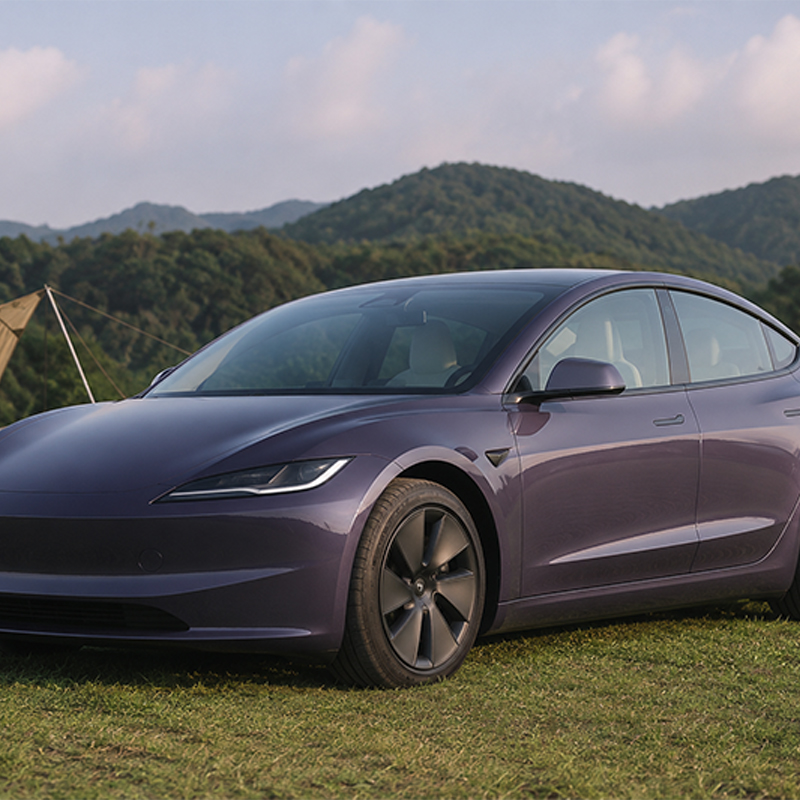
Crystal Violet is a captivating color change PPF that brings a mysterious, jewel-like purple hue to your vehicle's exterior. Rich and luminous, this s...
See Details
Crystal Color PPF: True Definition, Tech & Performance Data
Content
- 1 The Dyeing and Pigmentation Pathway Inside TPU
- 2 Color Stability Under Accelerated Weathering
- 3 Self-Healing Behavior in Pigmented Films
- 4 Optical Depth and the Wet Paint Look
- 5 The Difference Between Tinted TPU and Colored Vinyl
- 6 Installation Complexity and Edge Visibility
- 7 Chemical Resistance and Maintenance Requirements
- 8 Resale and Reversibility Considerations
Crystal Color PPF Is a Protective Film First, a Color Change Second
A Crystal Color PPF is a thermoplastic polyurethane paint protection film with integrated pigmentation that simultaneously shields factory paint from physical damage and alters the vehicle's appearance. Unlike a vinyl wrap, which is a thin cast PVC layer designed primarily for color change with negligible impact resistance, a colored PPF absorbs and disperses stone impact energy through its elastomeric TPU core while delivering a transparent tinted or solid color finish. The product combines two previously separate services—paint protection and color customization—into a single installation with a typical service life of 5 to 7 years. The critical engineering achievement is embedding colorants into the film matrix without compromising the optical clarity, UV resistance, or self-healing properties that define a functional paint protection film.
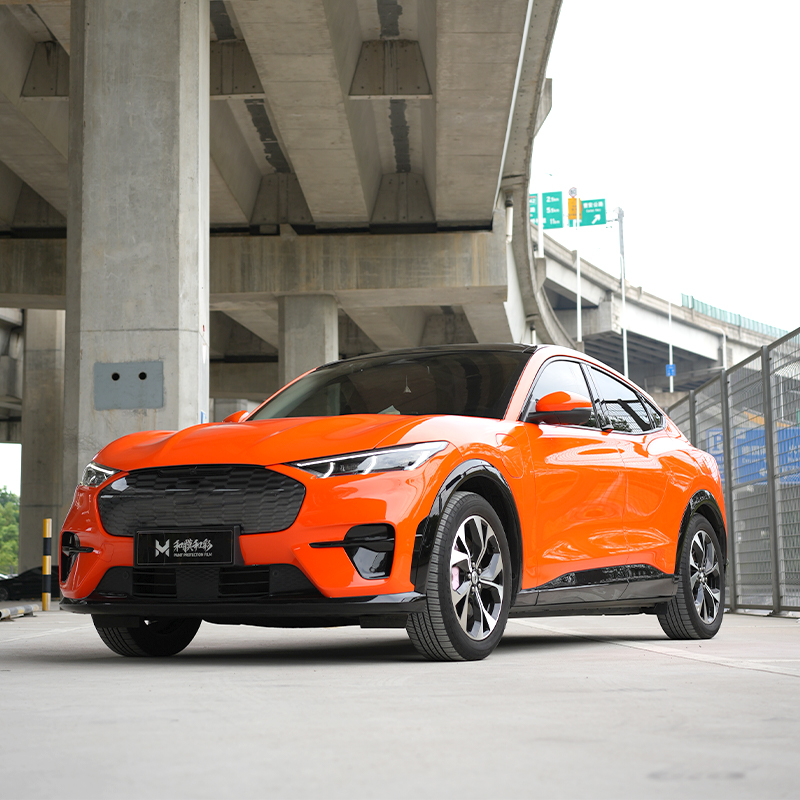
The Dyeing and Pigmentation Pathway Inside TPU
Coloring a polyurethane film without degrading its mechanical properties requires precision chemistry. There are three distinct approaches used in Crystal Color PPF manufacturing, each with different implications for longevity and appearance. The most stable method is bulk pigmentation using nano-scale organic pigments dispersed into the TPU melt before extrusion or casting. These pigment particles, typically below 100 nanometers in diameter, are small enough to avoid scattering visible light, preserving the film's transparency in lighter tints. The second method uses soluble dyes that dissolve at the molecular level into the TPU matrix, producing exceptionally vibrant colors but carrying a higher risk of photodegradation and color shift over years of UV exposure. The third and least durable method applies a colored coating layer between the TPU and the topcoat; this approach lowers cost but creates a failure interface where delamination can occur if the interlayer adhesion is imperfect.
Why Pigment Particle Size Determines Gloss and Depth
A Crystal Color PPF with a deep, liquid-like finish achieves that appearance because the pigment particles are too small to create surface haze. When pigment agglomerates exceed 200 nanometers, they scatter blue light preferentially, creating a milky cast that flattens the perceived color depth. Quality colored PPF maintains a gloss reading above 90 GU at a 60-degree measurement angle, comparable to a well-maintained clear-coated paint finish. The film achieves this through pigment dispersion techniques borrowed from the automotive OEM paint industry, where bead-milling breaks down pigment aggregates under high shear before the dispersion is introduced into the TPU resin.
Color Stability Under Accelerated Weathering
The most common concern with any colored exterior film is fading, and Crystal Color PPF products address this with varying degrees of success depending on the color chemistry. Darker colors, particularly blues and reds, are inherently more vulnerable because their pigments absorb high-energy visible and near-UV wavelengths, converting that energy into heat and free radicals that attack the polymer matrix. Accelerated xenon-arc weathering tests following SAE J2527 standards reveal that a quality Crystal Color PPF should exhibit a Delta E color shift of less than 2.0 after 3,000 kilojoules of exposure, a threshold below which the human eye cannot reliably detect a difference. Films using iron oxide-based pigments for earth tones routinely exceed this standard, while certain organic red pigments may reach Delta E 3.5 within 2,000 kilojoules. This data should inform color selection: silvers, grays, and earth-tone PPFs will outlast vivid blues and reds under identical exposure conditions.
| Color Family | Typical Pigment Chemistry | Delta E After 3000 kJ | Expected Visual Stability |
|---|---|---|---|
| Satin Gray / Silver | Titanium dioxide, carbon black, iron oxide | < 1.0 | Excellent, imperceptible change |
| Midnight Blue | Copper phthalocyanine, carbon black | 1.5–2.5 | Good, subtle shift at high exposure |
| Racing Red | Diketopyrrolopyrrole, quinacridone | 3.0–4.5 | Moderate, visible fading possible |
| Emerald Green | Chlorinated copper phthalocyanine | 1.0–2.0 | Very good, minimal change |
Self-Healing Behavior in Pigmented Films
The self-healing mechanism in clear PPF relies on the elastic recovery of TPU soft segments and a dedicated topcoat layer that flows to fill scratches. In a Crystal Color PPF, the presence of pigment particles in the film bulk does not inhibit this mechanism, but the topcoat must still be a separate, transparent functional layer. A scratch that penetrates only the clear topcoat will heal because the topcoat material is uncolored and fully elastomeric. A scratch that reaches into the pigmented TPU layer will not heal completely because the pigment particles act as physical crosslink points that pin the polymer chains and inhibit full flow recovery. The practical consequence is that deep scratches on colored PPF may remain visible as faint lines even after heat application. This makes topcoat thickness and hardness more critical on colored films than on clear ones; the topcoat must absorb and recover from the vast majority of daily abrasion before it ever reaches the colored layer beneath.
Optical Depth and the Wet Paint Look
A premium Crystal Color PPF achieves visual depth through a combination of topcoat refractive index matching and pigment dispersion uniformity. When the clear topcoat and the pigmented TPU layer share a closely matched refractive index—typically within 0.02 units at 589 nanometers—the interface between them does not create a reflective boundary. Light passes through the clear topcoat, enters the colored layer, reflects off the pigment particles and the underlying paint surface, and returns to the viewer's eye without internal scattering. This optical pathway makes the film look like a layer of clearcoat over colored paint rather than a plastic sticker. Films that fail to match refractive indices across layers produce a plastic-looking surface with reduced color saturation, often described as looking milky or hazy despite having adequate gloss meter readings.
The Difference Between Tinted TPU and Colored Vinyl
The market confusion between Crystal Color PPF and colored vinyl wrap is persistent and costly when it leads to incorrect product selection. A cast PVC vinyl wrap is typically 3 to 4 mils thick, consists of a calendered or cast PVC face film with printed or laminated color, and carries no meaningful impact protection. A colored PPF is 7.5 to 8.5 mils thick with a TPU core that stretches over 200% before breaking, absorbing the kinetic energy of a stone impact that would tear through vinyl and chip the underlying paint. The cost differential—colored PPF typically runs two to three times the installed price of vinyl—reflects the added material cost of aliphatic TPU resin, the complexity of pigment dispersion into the polymer melt, and the functional topcoat that enables self-healing. For a vehicle that sees highway commuting, the vinyl wrap on the front fascia will show stone-chip perforations within months; a colored PPF on the same surface will accumulate impact marks in the topcoat that heal with heat, leaving the paint intact for years.
Installation Complexity and Edge Visibility
Colored PPF presents installation challenges that clear film does not. On a clear PPF, an exposed edge is nearly invisible against any paint color. On a Crystal Color PPF, every edge is a visible color boundary against the underlying paint unless the film wraps fully around the panel edge. This forces installers to pursue fully wrapped edges on hoods, fenders, and doors wherever panel gaps permit. Bulk installations that trim on the vehicle body, common with clear film to save time, are rarely acceptable with colored film because the cut edge leaves a visible line of contrasting color. The result is that colored PPF installations demand more advanced templating, more disassembly, and more installer skill than clear PPF, and these additional labor hours should be expected in the quoted price. A properly installed colored PPF with fully wrapped edges is indistinguishable from a repaint at normal viewing distances.
Chemical Resistance and Maintenance Requirements
The topcoat on a Crystal Color PPF must resist the same contaminants as any automotive surface—bird droppings, tree sap, insect residue, and road tar—while also protecting the colored layer from UV-induced degradation. A quality topcoat achieves a water contact angle above 95 degrees, causing contaminants to bead rather than sheet and reducing dwell time. The maintenance protocol differs from paint in one critical respect: aggressive solvents and abrasive polishes that remove a thin sacrificial layer from clearcoat will remove the functional topcoat from PPF permanently. Once the topcoat is gone, the colored TPU layer begins to degrade directly. Maintenance should therefore emphasize pH-neutral cleaners, periodic ceramic topper application to reinforce surface energy, and immediate removal of organic contaminants before they etch. With this regimen, a Crystal Color PPF retains its appearance and protective function for its full service life.
Resale and Reversibility Considerations
One of the strongest arguments for Crystal Color PPF over a full respray is complete reversibility. The film can be removed with heat and the underlying factory paint—preserved from UV, oxidation, and mechanical damage throughout the film's service life—emerges in the same condition it was in on installation day. This has tangible resale value: a used vehicle with original factory paint commands a premium over one with a respray, which always raises questions about accident history. The removal process for colored PPF is identical to clear PPF; the adhesive system is the same acrylic pressure-sensitive chemistry designed to release cleanly within the film's rated service window. As long as the film is removed within the manufacturer's specified period, typically 5 to 7 years, the paint underneath requires nothing more than a light polish to remove any residual adhesive and restore full gloss.
Related products
-
-
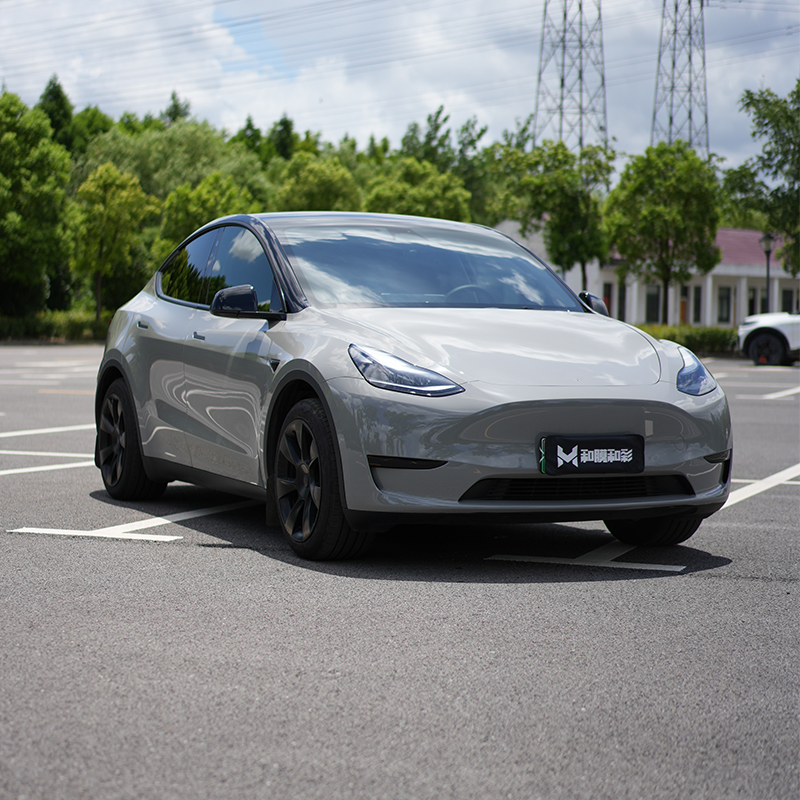
Sub Gray is a commanding and tactical color change PPF that evokes the stealthy silhouette of a submarine cutting through deep ocean waters. This deep...
See Details -
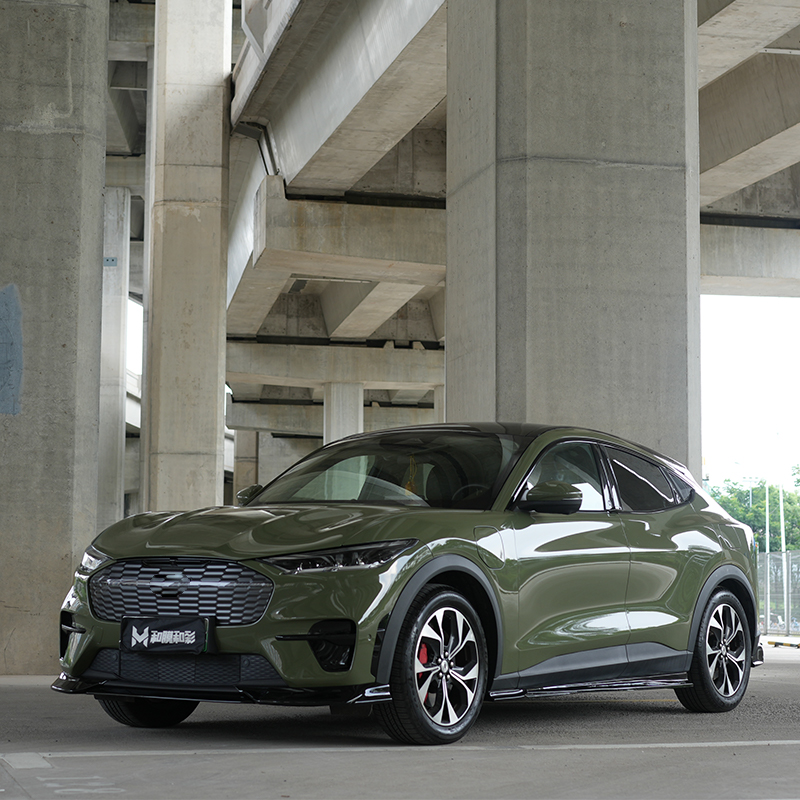
Foresland Army Green is a bold and commanding color change PPF that transforms your vehicle with the rugged, tactical aesthetic of military-grade gree...
See Details -
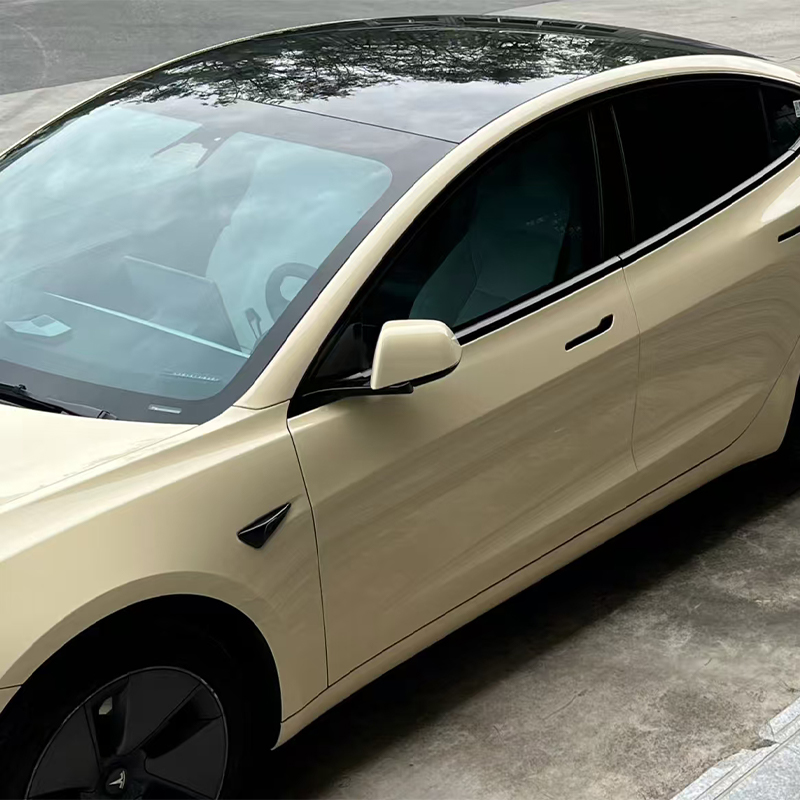
Crystal Khaki Milan is a refined and fashion-forward color change PPF that blends the earthy warmth of khaki with an Italian-inspired elegance. This d...
See Details
GET THE LATEST QUOTATIONS
-
 No. 5, Datang Road, East District, Development Zone, Guangde City, Xuancheng City, Anhui Province,242200, China
-
 [email protected]
-
 +86 18170340295
PRODUCTS
MOBILE WEB
Copyright Anhui He He New Materials Co., Ltd. All Rights Reserved.
 Wholesale TPU PPF Film Automotive TPU PPF Manufacturer