
 English
 русский
 Français
 Español
 Português
 Deutsch
 عربى
عربى
Advanced Solar Control & Safety for Modern Buildings Our architectural films are engineered using state-of-the-art Magnetron Sputtering Technology...
See Details
Architectural Window Film: Performance Metrics That Matter
Content
- 1 Why Thermal Stress Analysis Precedes Every Successful Installation
- 2 Adhesion Engineering for Modern Low-E Surfaces
- 3 UV Transmission and the Misunderstood Fading Equation
- 4 Edge Sealing and the Moisture Ingress Failure Mode
- 5 Interior Reflectivity and the Nighttime Mirror Effect
- 6 Safety Glazing Compliance and the Mechanics of Post-Breakage Retention
- 7 Payback Period Calculation and Energy Modeling
- 8 Dual-Reflective and Neutral-Appearance Films for Architectural Aesthetics
The Real Value of Architectural Window Film Lies in Its Engineered Selectivity
Architectural window film is not simply a tinted layer that makes windows darker. Its genuine value is measured by a single engineering metric: the selectivity ratio—visible light transmittance divided by the solar heat gain coefficient. A film that transmits 55% of visible light while blocking enough solar energy to achieve a SHGC of 0.28 produces a selectivity ratio of 1.96. This means the film lets in nearly twice as much light as heat, delivering daylighting benefits without the thermal penalty. The best spectrally selective films on the market today achieve ratios above 2.0, reflecting infrared radiation selectively through nanoscale ceramic or metallic coatings while remaining largely transparent to visible wavelengths. A building owner who understands this metric can evaluate film proposals objectively rather than defaulting to the darkest tint on the sample card.
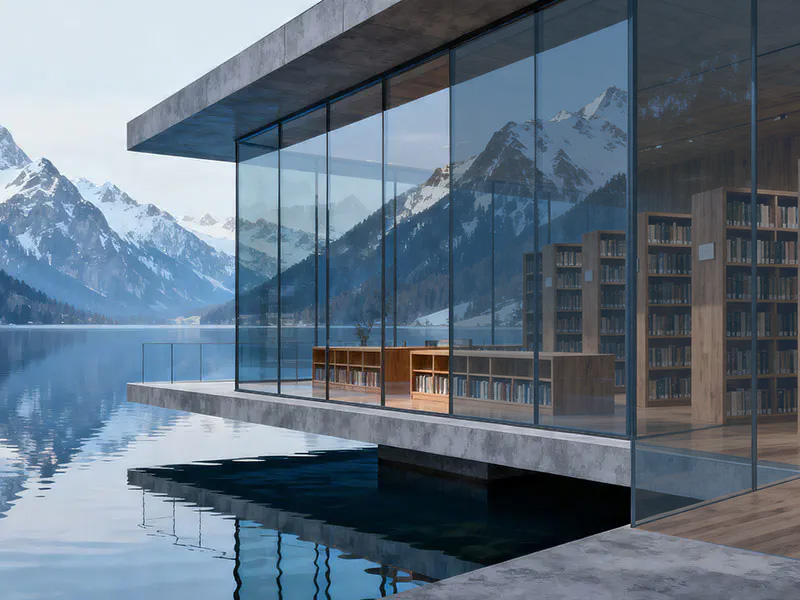
Why Thermal Stress Analysis Precedes Every Successful Installation
Applying architectural window film to the wrong glass type without a thermal stress assessment can crack the pane. The failure mechanism is straightforward: filmed glass absorbs more solar energy than bare glass, and if the center of the pane heats faster than the shaded edges held within the frame, a thermal gradient develops. When the tensile stress at the cooler edge exceeds approximately 40 MPa for annealed glass, a fracture initiates from the microscopic flaws always present at the cut edge. The variables that determine risk include glass type, edge condition, frame shadow depth, exterior shading from building elements, and the film's solar absorption percentage. A professional assessment calculates the predicted center-to-edge temperature differential under worst-case solar conditions for the building's specific latitude and orientation. This single engineering step separates a 20-year installation from one that fails during the first summer heat wave.
Absorption Thresholds by Glass Type
Clear annealed glass generally tolerates films with solar absorption up to 50% in small pane sizes, but that threshold drops to 35% for large format glazing. Tempered glass, having a compressive surface layer intentionally induced during manufacturing, tolerates absorption above 60% because surface flaws are held closed by the compressive stress field. Heat-strengthened glass sits between these two. Tinted glass presents a special hazard: it already absorbs significant solar energy in its raw state, and even a low-absorption film added to bronze or gray tinted glass can push the combined absorption into the danger zone. A competent film specification always includes a glass absorption plus film absorption calculation before any product recommendation is finalized.
Adhesion Engineering for Modern Low-E Surfaces
The interior surface of modern energy-efficient windows is not bare glass—it is a low-emissivity coating, either pyrolytic hard-coat deposited during the float glass process or sputtered soft-coat applied in a vacuum chamber afterward. These coatings present surface energies 10 to 20 dynes per centimeter lower than untreated soda-lime glass. A standard acrylic pressure-sensitive adhesive formulated for raw glass will bond inadequately to low-E, producing edge lifting that starts at corners within the first seasonal humidity cycle. The solution is a formulated adhesive with elevated polar monomer content and controlled crosslink density that creates a diffusion bond into the low-E coating rather than relying solely on surface tension wetting. For sputtered soft-coat low-E with surface energies dropping below 32 dynes per centimeter, specialty low-surface-energy adhesives with tailored migration chemistry are required. The adhesive must also remain pH-neutral over time; any acidic residue from incomplete polymerization will etch the low-E coating invisibly, and the damage only becomes apparent years later when the film is removed and the coating beneath has been destroyed.
UV Transmission and the Misunderstood Fading Equation
Marketing materials often claim that architectural window film prevents fading by blocking 99% of ultraviolet radiation. The complete fading equation, however, assigns UV only 40% of the responsibility for photodegradation. Visible light contributes approximately 25%, and heat—which accelerates chemical reaction rates in dyes, fabrics, and wood finishes—accounts for the remaining 35%. A film that blocks UV entirely but transmits high levels of visible light and retains a moderate SHGC will slow fading but not stop it. Comprehensive fading protection requires addressing all three vectors: UV below 380 nanometers must be filtered, visible light must be reduced to a controlled transmission level appropriate for the interior materials, and infrared heat must be reflected to keep surface temperatures low. Spectrally selective films approach this ideal by placing the solar rejection in the near-infrared band while transmitting controlled visible light, achieving a balance between preservation and interior brightness that no single-mechanism film can match.
| Fading Factor | Contribution to Fading | Dyed Film Mitigation | Spectrally Selective Film Mitigation |
|---|---|---|---|
| Ultraviolet (300–380 nm) | 40% | Blocks 99% | Blocks 99%+ |
| Visible Light (380–780 nm) | 25% | Reduced proportionally to VLT | Controlled, tunable VLT |
| Infrared Heat (780–2500 nm) | 35% | Minimal direct IR rejection | Reflects 80–97% in key IR bands |
Edge Sealing and the Moisture Ingress Failure Mode
The failure of architectural window film frequently initiates at its perimeter, not in its field. The cut edge of the film exposes the adhesive layer directly to ambient humidity. Over hundreds of daily humidity cycles, water molecules migrate along the adhesive-glass interface through capillary action, progressively breaking the van der Waals bonds that secure the film. The delamination front advances inward from the edge at a rate determined by the adhesive's water vapor transmission rate and the quality of the cut edge. A cleanly slit edge with minimal micro-roughness resists moisture ingress far better than a ragged die-cut edge. In high-humidity environments such as indoor pools, commercial kitchens, and coastal buildings, this failure mode accelerates dramatically. The mitigation is a two-part strategy: precision slitting during manufacturing to produce a smooth, square edge profile, and, for the most aggressive environments, a post-installation edge sealant that creates a hydrophobic barrier along the film perimeter. Without these measures, the film that looks perfect on installation day can show a growing band of delamination within three to five years in a humid environment.
Interior Reflectivity and the Nighttime Mirror Effect
A film with a high exterior solar reflectance often carries an equally high interior visible reflectance. During daylight hours, the brighter exterior masks this interior reflection. At night, when interior lighting is brighter than the exterior, the interior reflectance creates a mirror effect that makes the windows appear as reflective panels from inside the room, eliminating the view and creating a closed-in feeling. The threshold for acceptable interior reflectance is below 15% for commercial spaces and below 10% for residential applications where nighttime views are valued. High-performance films manage this through asymmetric optical designs where the exterior-facing layers are optimized for solar rejection while the interior-facing side incorporates an antireflective treatment. When specifying film for a space that will be occupied at night, the interior reflectance value deserves as much attention as the total solar energy rejected.
Safety Glazing Compliance and the Mechanics of Post-Breakage Retention
Architectural window film can upgrade existing glazing to meet safety standards when full glass replacement is cost-prohibitive. The relevant test standards—ANSI Z97.1 in the United States and EN 12600 in Europe—involve impacting a filmed pane with a specified impactor mass and verifying that shattered glass remains adhered to the film without creating an opening large enough to pass a 76-millimeter sphere. The film property that determines compliance is not tensile strength alone but elongation at break, which must exceed 100% to absorb impact energy without perforation. A film with high tensile strength and low elongation tears at the impact point. One with high elongation stretches to absorb energy while retaining glass fragments. Additionally, the film-to-frame attachment is critical: the film must be secured by a mechanical anchoring system or structural silicone attachment around the entire perimeter. A film that meets the impact test in a laboratory with a clamped frame but lacks perimeter attachment in the field installation does not provide rated safety performance.
Payback Period Calculation and Energy Modeling
The economic case for architectural window film rests on HVAC energy reduction and, in some jurisdictions, utility rebate eligibility. A proper energy model inputs the building's location, orientation, glazing area, existing glass specifications, local utility rates, and the film's NFRC-certified solar optical properties. The output is an annual kilowatt-hour reduction in cooling load and, in heating-dominated climates, a calculation of any heating penalty from reduced passive solar gain. For a typical commercial building with single-pane clear glass in a cooling-dominated climate, spectrally selective film produces a payback period of 2 to 4 years from energy savings alone. When demand charge reduction and HVAC equipment downsizing are factored in, the payback can shorten further. Buildings with existing low-E glass see longer payback periods because the incremental improvement is smaller; the economic analysis should be run on a case-by-case basis with actual building data rather than estimated from generic tables.
Dual-Reflective and Neutral-Appearance Films for Architectural Aesthetics
Older reflective films produced a mirrored exterior appearance that many building codes and architectural review boards now reject. The current generation of dual-reflective films offers high exterior solar reflectance for energy performance while maintaining a low, neutral interior reflectance. The exterior appearance presents a subtle, semi-reflective sheen rather than an opaque mirror, preserving the building's designed facade expression. Neutral-color films avoid the blue, green, or bronze color shifts that characterized earlier tinted products, making them compatible with the clear, gray, and ultra-clear low-iron glass specified in contemporary architecture. This aesthetic compatibility has expanded the addressable market for architectural window film into high-end commercial and residential projects where appearance constraints previously ruled out film as an option.
Related products
-

-
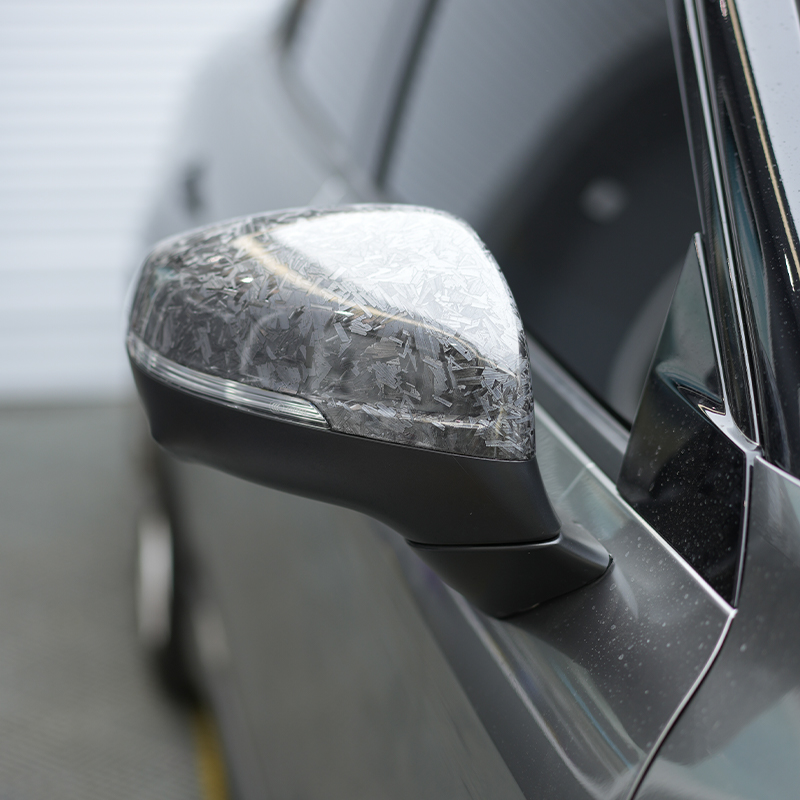
Forged Carbon Black Performance Metallic TPU Film draws inspiration from the raw, industrial beauty of forged carbon fibre and aerospace-grade black m...
See Details -

Command respect and admiration with the Metallic Gun Gray TPU Color PPF — an authoritative film that encases your vehicle in a deep, steely gray with ...
See Details -
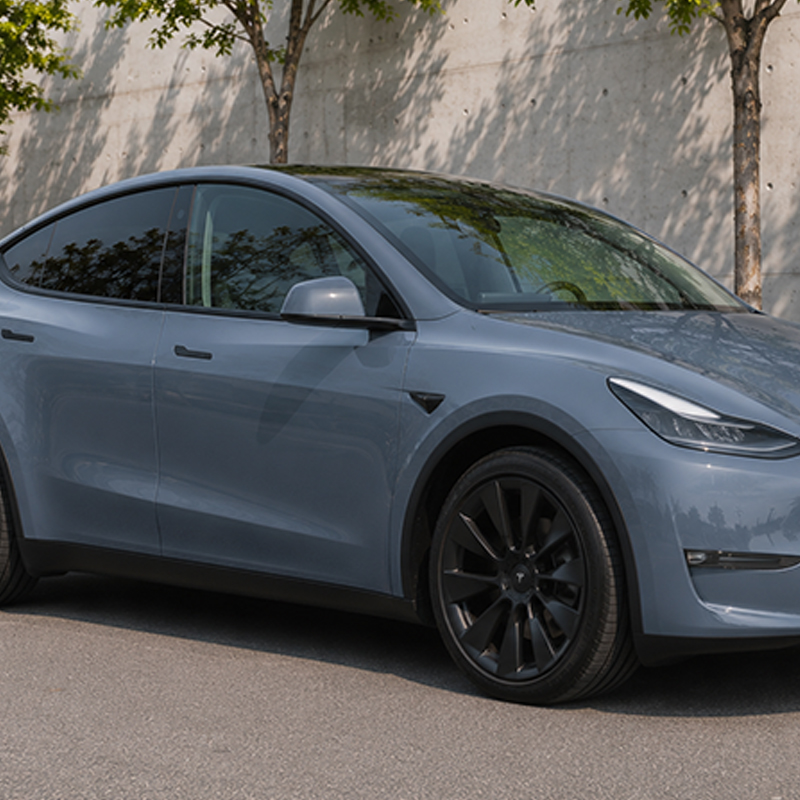
Kemora Grey Satin Crystal TPU Car Film offers a distinguished, European-inspired gray tone with a refined satin crystal finish that sits elegantly bet...
See Details
GET THE LATEST QUOTATIONS
-
 No. 5, Datang Road, East District, Development Zone, Guangde City, Xuancheng City, Anhui Province,242200, China
-
 [email protected]
-
 +86 18170340295
PRODUCTS
MOBILE WEB
Copyright Anhui He He New Materials Co., Ltd. All Rights Reserved.
 Wholesale TPU PPF Film Automotive TPU PPF Manufacturer