
 English
 русский
 Français
 Español
 Português
 Deutsch
 عربى
عربى
Advanced Solar Control & Safety for Modern Buildings Our architectural films are engineered using state-of-the-art Magnetron Sputtering Technology...
See Details
Home / News / Industry News / Automotive Window Film Buying Guide: Types, Benefits and Performance Comparison
Automotive Window Film Buying Guide: Types, Benefits and Performance Comparison
Content
A customer once pointed at his windows and asked why the cabin still felt like a greenhouse after twenty minutes in the sun. The car had tinted glass. What it did not have was film built to actually reject heat.
Automotive window film is an engineered construction, not a colored layer of plastic. It blocks solar heat, stops UV radiation, holds glass together in an impact, and changes the look of the vehicle. The practical rule is to match the film's measured performance to the problem you are solving, rather than choosing by shade alone. This guide covers what to compare, which types deliver what, and how to buy with confidence.
What a Quality Automotive Window Film Should Deliver
Conclusion first: a film is only as good as its weakest layer, and the performance numbers on the spec sheet are the only reliable way to judge it. The four functions that matter most are solar heat rejection, UV protection, impact safety and optical quality.
- Solar heat rejection: the film reflects or absorbs infrared energy before it reaches the cabin.
- UV protection: a quality film blocks 99% or more of UVA and UVB, protecting both passengers and upholstery.
- Impact safety: safety-rated film keeps glass fragments attached when a window is struck.
- Optical quality: the film stays clear, without haze, distortion or streaks at any angle.
Good heat rejection reduces air-conditioning load and keeps the cabin comfortable on long drives. UV rejection prevents dashboard and seat fading while lowering exposure for passengers. Safety-rated film matters most for side and rear glass, where the original window is often not laminated. A well-built film delivers all four without forcing the interior to be unnecessarily dark.
Automotive Window Film Types Compared
Different constructions exist because vehicles and drivers are different. Some owners need maximum heat control with a near-factory appearance; others need protection from broken glass; others want the glass itself to be part of the styling. The table below summarizes the main options.
| Film Type | Construction | Key Strength | Typical Use |
|---|---|---|---|
| Nano ceramic | Ceramic particles embedded in a multi-layer base film | High heat rejection with neutral appearance and clear visibility | Daily drivers in hot climates, signal-sensitive vehicles |
| Magnetron sputtering | Ultra-thin metallic layers deposited onto the film base | Consistent solar performance with a clean, moderate look | Cars that need balanced tint without extreme darkness |
| Clear safety | Thick polyester layer with impact-resistant adhesive | Holds glass together when the window breaks | Windshields, rear glass, family vehicles |
| Iridescent | Multi-layer optical coating that shifts color at different angles | Color-changing appearance and distinct styling | Custom builds, show cars and cosmetic upgrades |
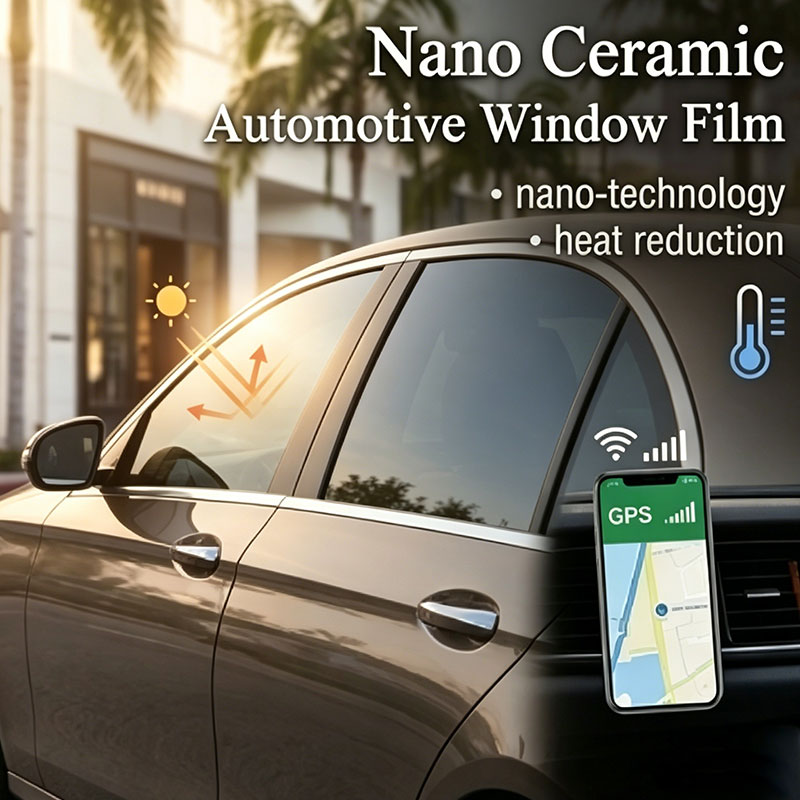
Nano ceramic film has become the standard recommendation for drivers in warm regions. Ceramic particles absorb and reflect infrared energy while letting visible light pass, so a vehicle can run a relatively light windshield or side window and still reject a substantial share of solar heat. Because there is no metallic layer, ceramic film is also the safer choice for cars with navigation systems, phone chargers or toll transponders. For a closer look at the available builds, see the company's nano ceramic automotive window film range.
 Nano Ceramic Automotive Window Film Manufacturers, FactoryArrayView Product →
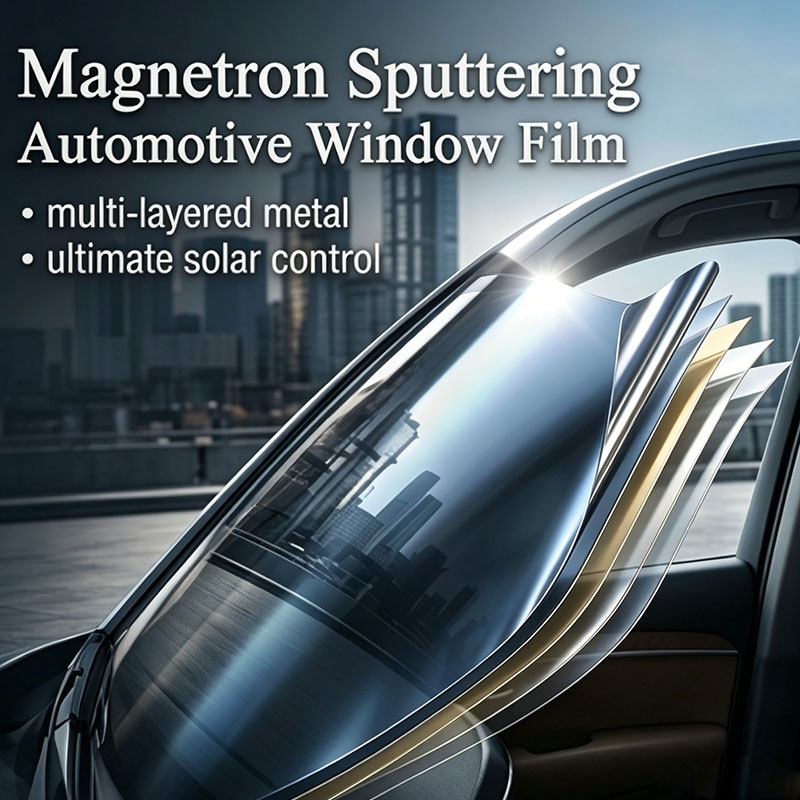
Magnetron sputtering takes a different route: metallic layers are deposited onto the film base in a controlled vacuum process, producing a uniform product with strong heat rejection and a natural appearance. Sputtered film is a good middle ground for owners who want serious solar control without an intensely dark tint. The iridescent option in the table is primarily a styling product, creating a subtle color shift on the glass; it is rarely selected for heat control alone.
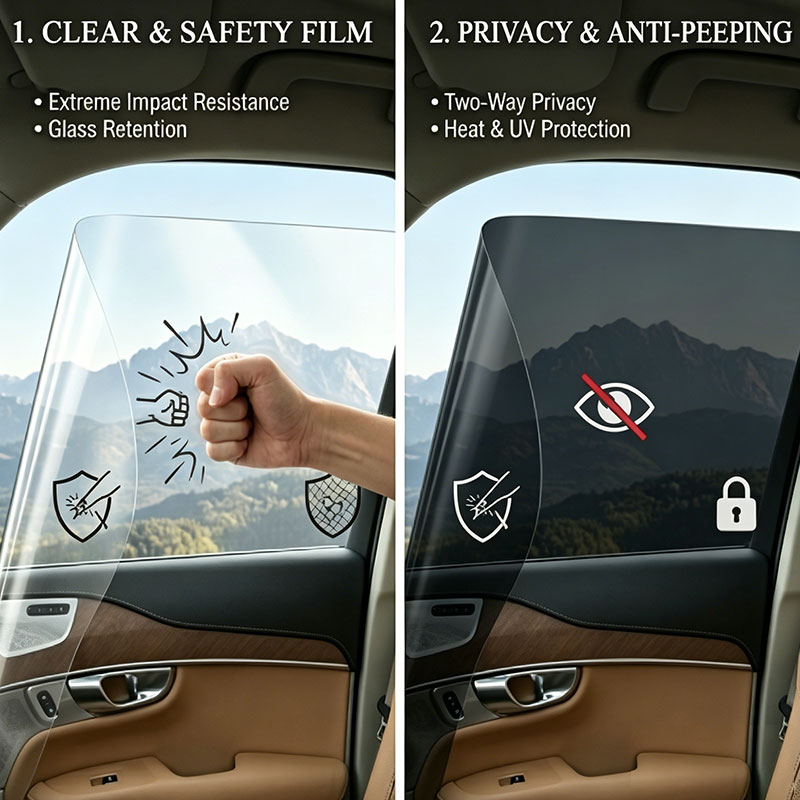
Clear safety film completes the lineup. It is built around a thick polyester layer that holds glass fragments together on impact, and it can be applied to the windshield or rear glass without changing how the vehicle looks. Family cars and fleets typically combine it with a tinted side-window film to get both protection and privacy.
How to Read the Numbers Before You Buy
Every film worth installing ships with a spec sheet, and three measurements matter more than the brand name: visible light transmission, total solar energy rejected, and UV rejection.
- Visible light transmission (VLT): the percentage of visible light that passes through the glass and film. Local rules for front-side windows usually set the starting point, and going too dark makes the cabin uncomfortable at night.
- Total solar energy rejected (TSER): the percentage of total solar energy the film rejects, including infrared, visible and UV. This is the number to compare first, because it predicts how cool the cabin will stay.
- UV rejection: quality films block 99% or more of UVA and UVB regardless of tint level. If the spec sheet omits UV rejection entirely, treat the product as incomplete.
A realistic example: a 40% VLT ceramic film can reject half or more of the total solar energy while keeping the interior visually bright. A 15% VLT dyed film can look far darker yet reject considerably less heat. Appearance does not equal performance. Sputtered films, such as the magnetron sputtering automotive window film range, typically combine a strong TSER with a moderate VLT, which makes them a practical starting point for drivers who want heat control without a blacked-out look.
 Magnetron Sputtering Automotive Window Film Manufacturers, FactoryArrayView Product →
Clarity matters as much as the big three. A good film shows no haze, no distortion and no visible streaks when viewed at an angle. If a manufacturer does not publish real data for thickness, UV rejection and TSER, ask for it before the roll is cut.
Choosing the Right Film for Your Vehicle
Start with the vehicle, the climate and the driver's habits, then move to appearance. In hot, sunny regions, prioritize TSER above everything else; ceramic or sputtered film will do the job. For drivers who spend significant time at night, keep the front windows at a legal VLT and use a clear film on the windshield so vision is never compromised.
Safety changes the calculation. A clear safety automotive window film applied to the windshield and rear glass holds shattered glass in place during an accident or a break-in attempt, without changing the vehicle's appearance. Family cars, rental fleets and vehicles carrying elderly passengers benefit the most. When protection is the goal, the right order is usually clear film first for safety, then a tinted film if heat and privacy are also needed.
 Clear & Safety Automotive Window Film Manufacturers, FactoryArrayView Product →
Styling comes last but is still legitimate. Iridescent films add a color shift to the glass and suit custom builds, but they should be judged on durability and optical clarity as carefully as any other product.
Installation and cure time
Even the best film fails if installation is rushed. The glass must be cleaned of every particle, the film shrink-fitted to the curve of the window, and the edges trimmed without scratching the glass. The adhesive also needs time to cure; small water pockets disappear as it dries, and the windows should ideally be left untouched for several days. That process, more than the film's price, determines how the job looks after one year.
What Buyers Should Expect from a Film Supplier
Workshops, distributors and brands rarely evaluate a single roll of film; they evaluate consistency. The same shade from batch to batch, the same adhesion through summer heat, and the same data sheet every time an order arrives. That consistency comes from the manufacturer. A company that controls the process from material formulation to coating, slitting and packaging can keep tolerances tight, adjust gloss or thickness for a specific order, and stand behind the product with real test data. That is why many professionals choose to work with a vertically integrated partner instead of sourcing film from a trader.
Buyers can verify a supplier by asking three questions: where the film is produced, how quality control is documented, and what happens when a roll fails. A manufacturer that documents the answers is easier to hold accountable. For businesses comparing sources, the first order is the cheapest time to test the relationship: request samples, measure the film, install it on a test vehicle, and record the results before committing to a product line.
The right automotive window film is not the darkest one or the most expensive one. It is the film whose construction matches the vehicle, the climate and the driver's habits. Start with the numbers, install with care, and buy from a supplier that is accountable for the film it ships. That combination is what separates a satisfying tint job from a regretted one.
Related products
-
-
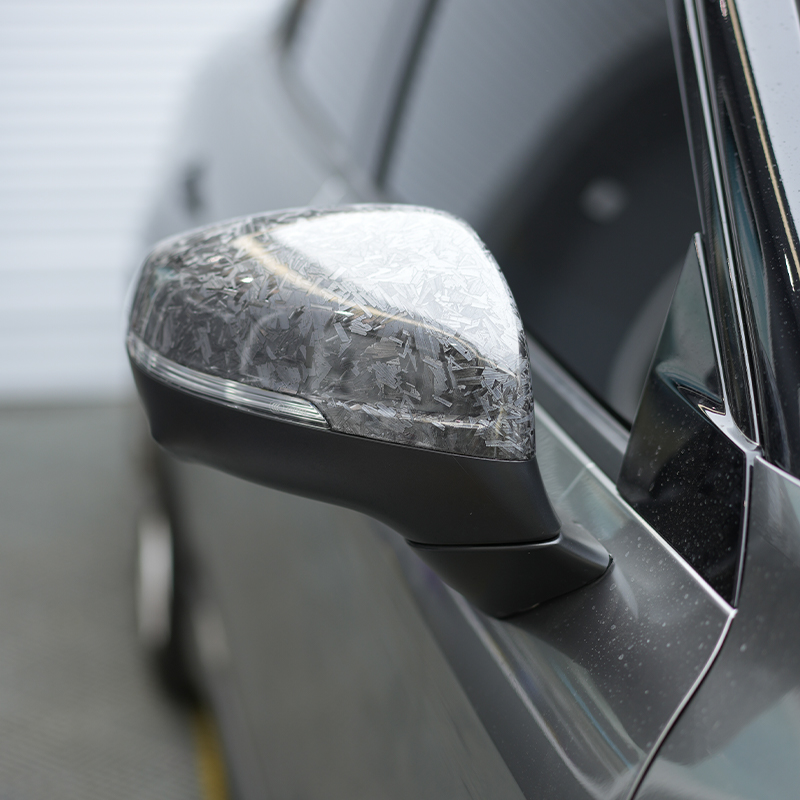
Forged Carbon Black Performance Metallic TPU Film draws inspiration from the raw, industrial beauty of forged carbon fibre and aerospace-grade black m...
See Details -
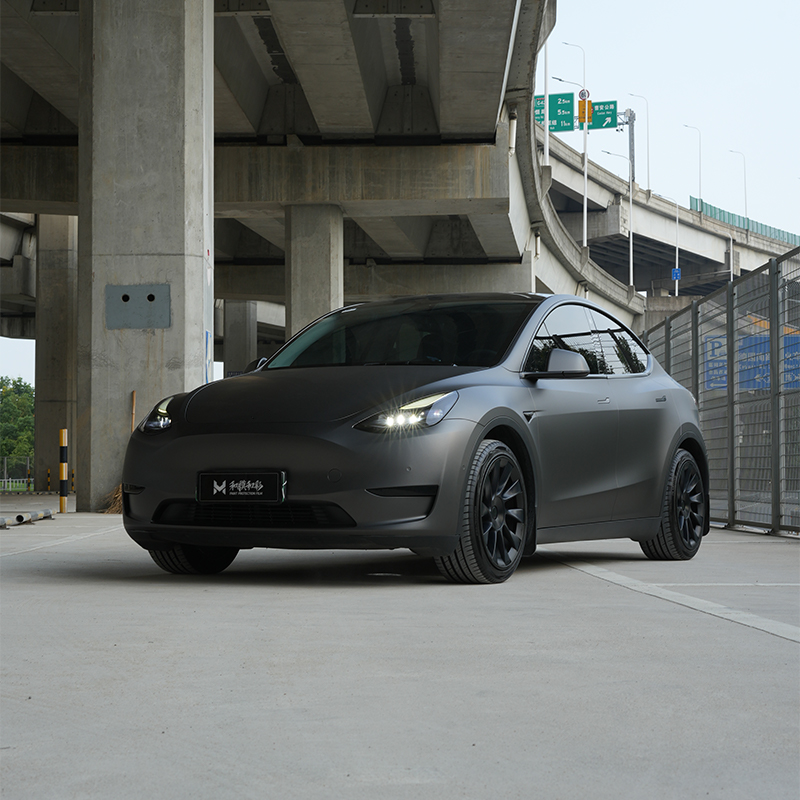
Super Matte AMG Grey Stealth Automotive TPU Film is the definitive choice for owners seeking a zero-compromise ultra-flat matte finish. Designed with ...
See Details -
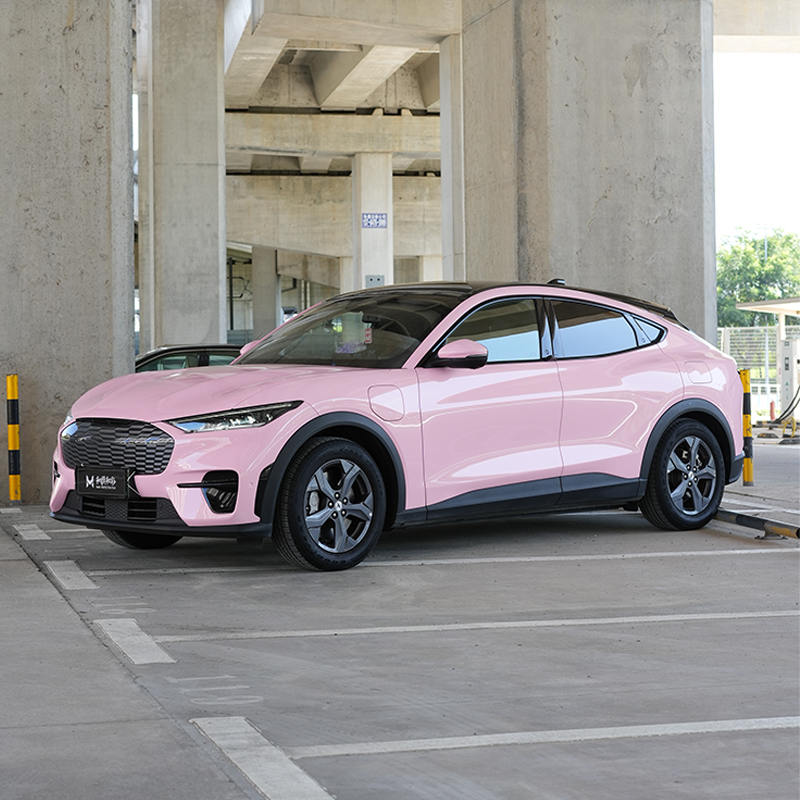
Lolita Pink Candy Crystal TPU Wrap Film is a celebration of sweetness, femininity, and playful luxury. Inspired by the delicate, candy-like aesthetics...
See Details
GET THE LATEST QUOTATIONS
-
 No. 5, Datang Road, East District, Development Zone, Guangde City, Xuancheng City, Anhui Province,242200, China
-
 [email protected]
-
 +86 18170340295
PRODUCTS
MOBILE WEB
Copyright Anhui He He New Materials Co., Ltd. All Rights Reserved.
 Wholesale TPU PPF Film Automotive TPU PPF Manufacturer