
 English
 русский
 Français
 Español
 Português
 Deutsch
 عربى
عربى
Super Matte AMG Grey Stealth Automotive TPU Film is the definitive choice for owners seeking a zero-compromise ultra-flat matte finish. Designed with ...
See Details
Home / News / Industry News / Thin Film Coating Explained: From Deposition Basics to Automotive Film Systems
Thin Film Coating Explained: From Deposition Basics to Automotive Film Systems
Content
- 1 What Thin Film Coating Actually Means
- 2 How Thin Film Coatings Are Made
- 3 Thin Film Coating in Automotive Paint Protection
- 4 Color Films Bring Thin Film Coating to Appearance Work
- 5 Window Film Is a Thin Film Coating for Glass
- 6 How to Evaluate a Thin Film Coating Supplier
- 7 Choosing the Right Approach for Your Business
An installer places two rolls of "self-healing" PPF side by side. One holds a firm edge when lifted and repositioned; the other wrinkles and leaves a faint haze. The difference is the topcoat, and it is invisible until the film is on a vehicle. This is what thin film coating means in practice. The term covers any engineered layer applied to a surface, but in the automotive world it most often refers to pre-manufactured polymer film systems. Their performance is decided by layer construction, coating uniformity, and thickness control.
What Thin Film Coating Actually Means
In materials science, a thin film is a layer with a thickness that ranges from a fraction of a nanometer, a single atom, to several micrometers. Deposition processes such as physical vapor deposition and sputtering build these layers atom by atom on a substrate, which is how anti-reflective lens coatings and conductive touchscreen layers are made. The same technology appears in mirror coatings, solar cells, and integrated circuits.
Polymer film coatings belong to a different branch of the same family. They are produced separately, usually in thicknesses from 50 to 250 micrometers, and then applied to a surface with a pressure-sensitive adhesive. That thickness gap is decisive. A sputtered coating of a few micrometers protects optical components but cannot absorb the impact of a stone at highway speed. A 200-micrometer TPU film can, and it can be removed later without damaging the paint underneath. For vehicles, pre-formed polymer film is therefore the dominant thin film coating solution.
How Thin Film Coatings Are Made
Two very different production worlds create thin film coatings. Vacuum-based processes heat a material until it evaporates, or use plasma to eject atoms from a target; the vapor condenses onto a substrate in a chamber. Roll-to-roll vacuum coating applies this principle to continuous polymer webs, which is how some functional layers on window films are deposited.
Polymer film coatings are made on precision coating lines. The base layer, usually TPU or polyester, is extruded to a controlled thickness. Functional layers such as topcoats, hard coats, self-healing layers, and adhesives are applied with slot-die, gravure, or reverse roll coating, then dried and cured. Every coating step sets a tolerance that later appears on the vehicle: inconsistent coat weight shows up as optical distortion; uneven adhesive thickness causes edge lifting; a non-uniform topcoat leads to uneven scratch resistance.
| Method | Working Principle | Typical Thickness | Primary Use |
|---|---|---|---|
| PVD sputtering | Plasma ejects atoms from a target onto a substrate | 0.1 to 10 micrometers | Optical and hard coatings |
| Thermal evaporation | Heated material vaporizes and condenses | 0.01 to 5 micrometers | Metal and decorative layers |
| Slot-die coating | Precision liquid layer applied through a die | 5 to 200 micrometers wet | Adhesives and functional layers |
| Gravure coating | Engraved roller transfers a liquid layer | 1 to 50 micrometers wet | Topcoats and release coatings |
Thin Film Coating in Automotive Paint Protection
Paint protection film is a multi-layer thin film system that sits on top of the vehicle's clear coat. The structure has three functional layers:
- A clear topcoat that provides self-healing and scratch resistance
- A TPU core that absorbs impacts and carries tensile strength
- A pressure-sensitive adhesive layer that bonds the film to the paint
Total thickness is typically 150 to 250 micrometers, which is why the film behaves like a physical shield rather than a painted layer. Self-healing is the clearest demonstration of the technology at work. The topcoat uses a polymer network that reflows when heat is applied, causing light scratches to disappear with warm water, a heat gun, or sunshine. The depth of the topcoat determines how deep a scratch it can heal and how many times the healing cycle can repeat.
Impact resistance follows the same logic. A stone chip deforms the TPU core and spreads the force over a wider area before the paint is reached. If the core is consistent in thickness and free of voids, the paint stays intact. That is why film thickness consistency is not a technical curiosity. It is the difference between a film that protects a hood for years and one that fails after a single winter.
For high-exposure panels such as hoods, bumpers, and mirror caps, installers usually reach for premium TPU paint protection film, which pairs a thicker topcoat with higher gloss and better clarity. The extra cost buys measurable performance: deeper self-healing, more consistent color, and longer outdoor durability.
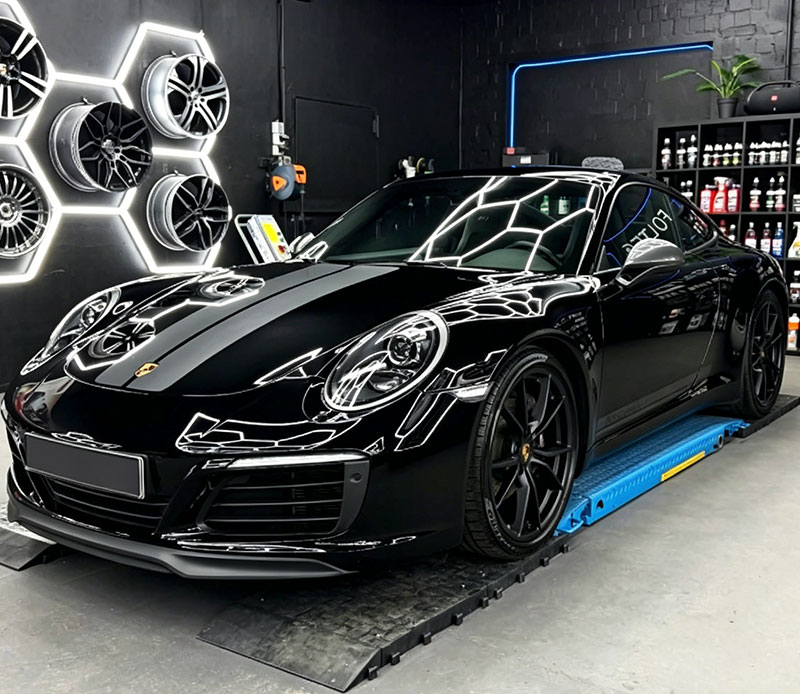 Premium TPU Clear PPF Manufacturers, FactoryArrayView Product →
Color Films Bring Thin Film Coating to Appearance Work
Color change is the second major application of thin film coating on a car. Colored PPF combines the protective architecture of clear film with a pigmented layer, so the vehicle gets a new color and retains the impact and self-healing properties of a TPU system. This puts it between a vinyl wrap, which offers almost no protection, and a full repaint, which is permanent and costly.
Finish categories are defined by the coating system: crystal finishes produce deep, glossy tones; matte finishes reflect a low-sheen satin look; metallic pearl finishes add a fine metallic shimmer; chameleon films shift color with the viewing angle. The finish is not just decoration. It comes from the topcoat formulation and the coating process, and it dictates how the film behaves during stretching and how much maintenance it needs afterward.
Color consistency matters more than most buyers realize. A slight variation in pigment between batches is obvious outdoors, particularly on vertical panels side by side. A film factory that documents color coordinates and controls them from batch to batch prevents that problem. One example is crystal ceramic blue TPU film, produced as part of a color series with defined color values rather than a one-off visual match.
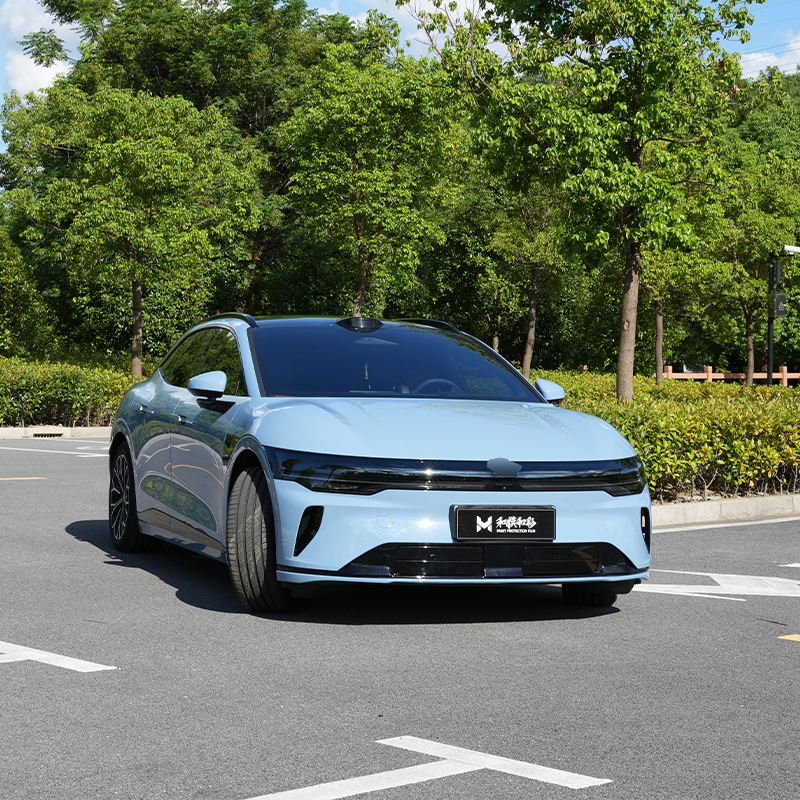 Crystal Ceramic Blue TPU Car Wrap Film Suppliers, Company - Anhui He He New MateArrayView Product →
Window Film Is a Thin Film Coating for Glass
Automotive window film reaches the same endpoint through a different route. A polyester substrate, usually 1.5 to 2 mils thick, receives a functional coating either by magnetron sputtering, which deposits metallic or metal-oxide layers in a vacuum, or by a nano-ceramic dispersion, which embeds ceramic particles in the coating or adhesive layer. The finished film is then applied to the inside of the glass.
Three specifications matter when choosing a window film:
- Visible light transmission, because legal limits differ by jurisdiction
- Infrared rejection, which determines how much heat enters the cabin
- Ultraviolet rejection, which protects seats and dashboards from fading
A high-performance nano-ceramic film blocks a meaningful share of infrared heat while keeping visible light high enough for driving at night. UV rejection should be at least 99 percent, since damage to interior surfaces happens at invisible wavelengths. Just like PPF, window film performance depends on layer consistency across the roll. A factory that makes nano-ceramic automotive window film on a dedicated line can document that consistency; a reseller cannot.
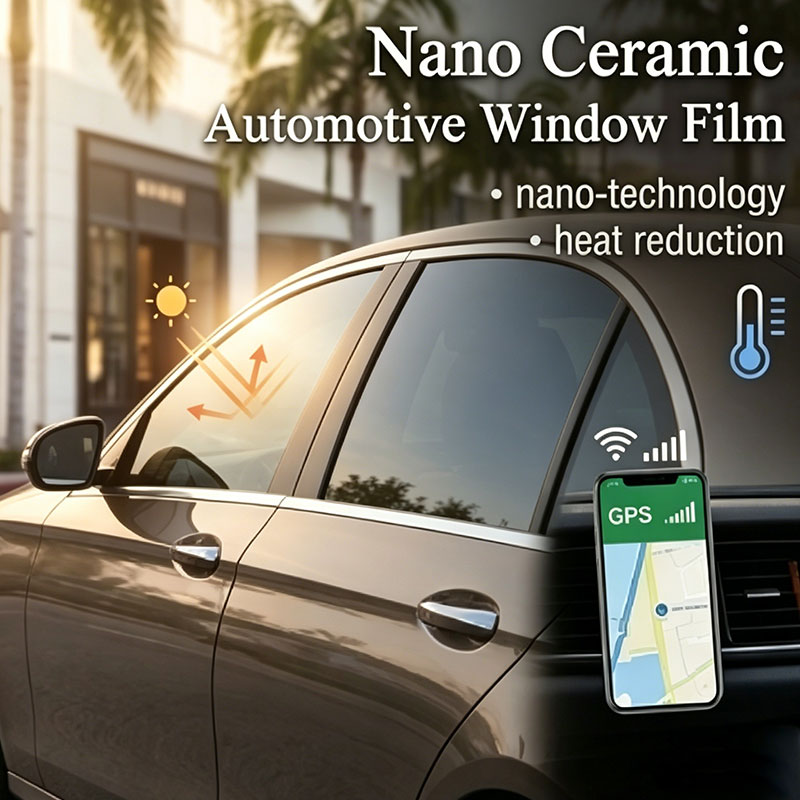 Nano Ceramic Automotive Window Film Manufacturers, FactoryArrayView Product →
How to Evaluate a Thin Film Coating Supplier
Whether you buy PPF, color film, or window film as an installer, distributor, or brand owner, a few questions separate reliable suppliers from the rest. First, does the factory control the complete production chain? A vertically integrated manufacturer can answer questions about raw materials, coating tolerances, and batch consistency with data. A trading company can only forward the question.
Second, what does the factory test, and how often? Ask about thickness measurement, optical clarity, adhesion strength, and color matching. Films that pass a documented quality control process behave predictably across rolls and vehicles. Films that pass only a visual check will surprise you in the field, usually at the worst moment.
Third, what happens when a product fails? Film defects such as delamination or yellowing usually appear months after installation. The supplier's willingness to log the failure, identify the cause, and adjust the process is a better measure of reliability than any brochure language.
Choosing the Right Approach for Your Business
Thin film coating is a broad term, but in the automotive market its practical meaning is clear: engineered polymer and coated films that protect, colorize, and shade vehicle surfaces. The performance of these films is set by their construction: topcoat chemistry, core thickness, adhesive quality, and color consistency. Buyers who evaluate films on those parameters, and suppliers who control them in production, get predictable results.
Start by discussing your installation conditions and performance requirements with a manufacturer that can show you its production line and quality data. A film supplier that treats thin film coating as a precise discipline will usually be the one that delivers dependable protection, roll after roll. Contact the factory directly to see how the process works before you commit.
Related products
-
-
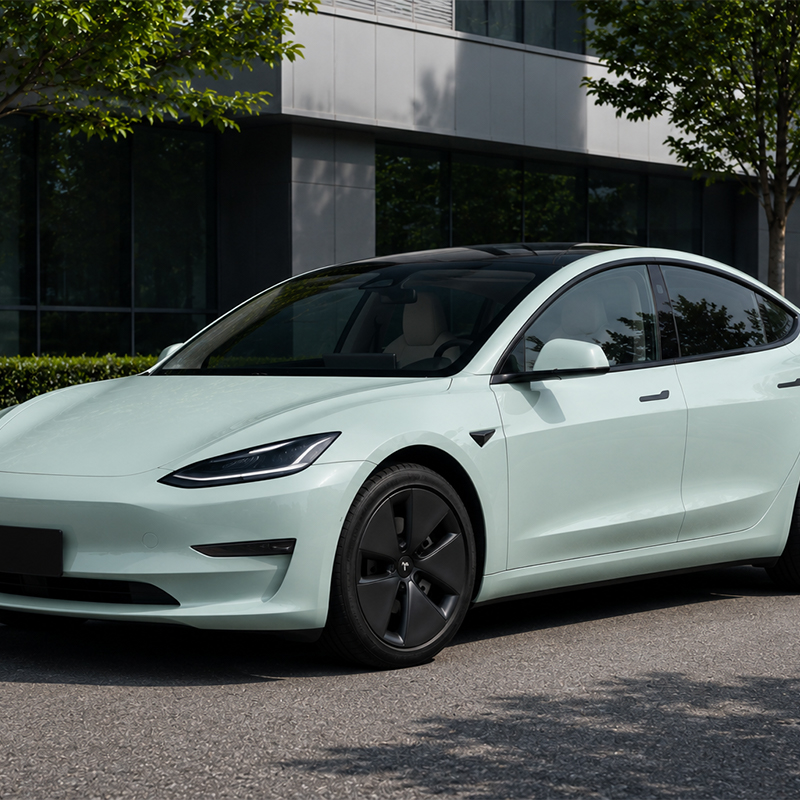
Somato Blue Liquid Pearl TPU Car Wrap Film presents a sophisticated, European-inspired deep blue in a liquid pearl finish that flows and shimmers with...
See Details -
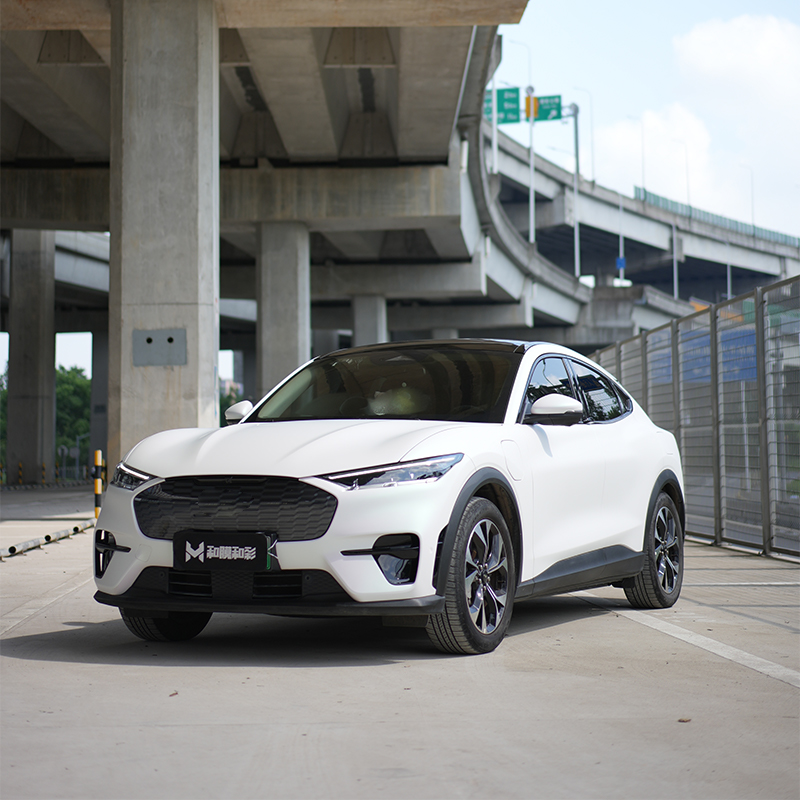
Matte Dawn White Frosted Automotive TPU PPF captures the serene purity of early morning light in a premium frosted white finish. The soft, non-reflect...
See Details -

Advanced Solar Control & Safety for Modern Buildings Our architectural films are engineered using state-of-the-art Magnetron Sputtering Technology...
See Details
GET THE LATEST QUOTATIONS
-
 No. 5, Datang Road, East District, Development Zone, Guangde City, Xuancheng City, Anhui Province,242200, China
-
 [email protected]
-
 +86 18170340295
PRODUCTS
MOBILE WEB
Copyright Anhui He He New Materials Co., Ltd. All Rights Reserved.
 Wholesale TPU PPF Film Automotive TPU PPF Manufacturer