
 English
 русский
 Français
 Español
 Português
 Deutsch
 عربى
عربى
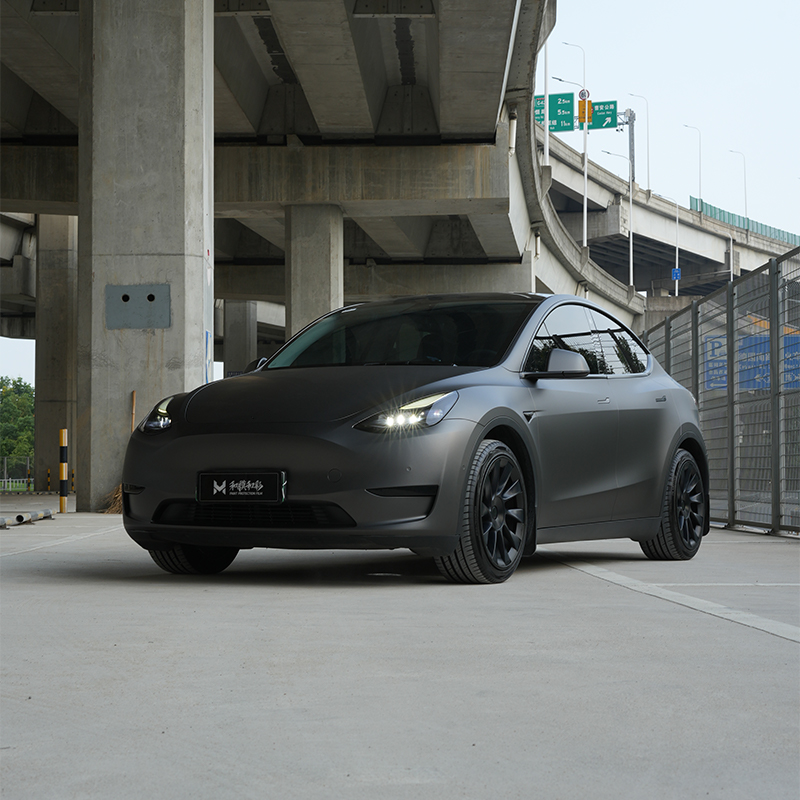
Super Matte AMG Grey Stealth Automotive TPU Film is the definitive choice for owners seeking a zero-compromise ultra-flat matte finish. Designed with ...
See Details
Automotive Window Film: UV & Heat Rejection Deep Dive
Content
- 1 Infrared Heat Rejection and the Solar Spectrum
- 2 Why Total UV Protection Is a Health and Preservation Necessity
- 3 Multi-Layer Engineering for Optical Precision and Safety
- 4 Signal Transparency and Modern Connectivity
- 5 The Full-Chain Customization Advantage
- 6 Practical Quality Indicators Before You Commit
Modern automotive window films are far more than a cosmetic upgrade or a privacy shield. They represent a precision-engineered fusion of optical-grade polyester, nano-ceramic coatings, and specialty adhesives. When correctly specified, a professional car window film can reject up to 99% of infrared heat, block virtually all ultraviolet radiation, enhance shatter resistance, and maintain flawless signal transparency. For distributors and brand owners, the key to unlocking true product differentiation lies in partnering with a direct manufacturer that controls the entire production chain—from adhesive formulation to final coating—ensuring consistent quality and deep customization capabilities.
Infrared Heat Rejection and the Solar Spectrum
Heat discomfort inside a parked or moving vehicle is driven primarily by solar infrared radiation, which accounts for roughly 53% of the sun’s energy reaching the car’s surface. A window film’s ability to block this specific wavelength is measured by the Infrared Rejection Rate (IRR). Advanced multi-layer films utilizing nano-ceramic or sputtered particle technologies can deliver IRR values of up to 99%, dramatically lowering dashboard and seat surface temperatures.
However, IRR alone does not paint the complete picture. The Total Solar Energy Rejected (TSER) metric is equally critical because it accounts for heat across ultraviolet, visible, and infrared spectrums. A film with high IRR but low visible light reflection may still allow significant solar energy to enter as visible light that converts to heat inside the cabin. For a balanced driving experience, professional films target a TSER often exceeding 60% while maintaining safe visible light transmission levels. The following table illustrates the relationship between key solar performance metrics in high-performance automotive window films.
| Film Type | IRR (Infrared) | TSER (Total) | Visible Light Transmittance |
|---|---|---|---|
| Dual-Layer Nano Ceramic | 98% | 64% | 70% |
| Premium Magnetron Sputtered | 97% | 62% | 65% |
| High-Performance Dyed Metal Hybrid | 92% | 55% | 35% |
Why Total UV Protection Is a Health and Preservation Necessity
Ultraviolet radiation is responsible for more than 50% of interior material degradation, including dashboard cracking, leather fading, and fabric weakening. More importantly, drivers receive a disproportionate amount of sun exposure on their left side. A study published in the Journal of the American Academy of Dermatology found that in countries with left-hand drive vehicles, the left arm and left side of the face develop significantly more UV-related skin damage over time.
A genuine car UV protection window film must deliver full-spectrum blocking, not just partial attenuation. The best films incorporate UV absorbers directly into the adhesive and polyester layers, achieving a UV transmission rate below 0.1% across both UVA and UVB bands. This is equivalent to an Ultraviolet Protection Factor well above 1000, offering continuous, maintenance-free protection for both occupants and the vehicle’s interior.
- Blocks over 99.9% of UVA rays (320‑400 nm), which penetrate deep into the skin.
- Eliminates UVB rays (290‑320 nm) that cause immediate surface burns.
- Slows the oxidation and discoloration of leather, plastics, and textiles by years.
Multi-Layer Engineering for Optical Precision and Safety
The core of any reliable automotive window film is its substrate: a high-clarity polyester layer that determines optical performance. On top of this, a scratch-resistant hard coat protects against daily wear, while a precisely formulated functional coating—often containing nano-ceramic or metal particles—delivers the solar control properties. The mounting adhesive system is the final, invisible layer that must balance strong peel adhesion with clean removability over many years.
This layered architecture provides two often-overlooked benefits. First, optical distortion is held to an absolute minimum; advanced films exhibit haze values of less than 1%, ensuring that the view through the glass remains crisp and unaltered. Second, the total construction significantly increases the glass’s resistance to impact. In a collision or attempted break-in, the film helps hold shattered glass together, reducing the risk of injury from flying fragments. A film with a thickness of 2 mil or above can raise the window’s impact resistance measurably, turning a standard tempered side window into a safety barrier.
Signal Transparency and Modern Connectivity
A common concern with older metallic films was their tendency to block GPS, mobile phone, and toll pass signals by creating a Faraday cage effect. Contemporary car window film designs solve this problem entirely. By using non-conductive ceramic or advanced carbon-based particles, the films maintain zero signal interference. This is critical for new energy vehicles that rely on constant connectivity for navigation, telematics, and over-the-air updates. When evaluating a film for a modern fleet or retail line, verified signal pass-through performance across 5G, Wi-Fi, and Bluetooth frequencies is a non-negotiable requirement.
The Full-Chain Customization Advantage
For businesses seeking to build their own brand of automotive window film, working with a direct factory that possesses a complete in-house production chain transforms the supply relationship. Instead of selecting from pre-existing catalog specifications, you can co-engineer the product. This includes adjusting the film thickness from 1.5 mil to 2.5 mil for different market segments, fine-tuning the coating to meet regional visible light transmission laws, and selecting specific adhesive formulas for easy installation in varying climates.
A true full-industry-chain manufacturer handles everything from specialty adhesive research and development to precision multi-layer coating under one roof. This vertical integration yields higher batch-to-batch consistency, tighter tolerances on color and performance, and faster turnaround for OEM/ODM projects. It also provides full access to marketing materials and technical datasheets that empower distributors to sell with confidence. The ability to offer a car UV protection window film with a unique color shift or an unmatched heat rejection profile becomes a real competitive moat, rather than just a price war.
Practical Quality Indicators Before You Commit
Without relying on brand names, how can a distributor or a professional installer assess a film’s true quality? Several straightforward tests and data points reveal the engineering depth behind the product.
- Heat lamp demonstration: Place the film sample in front of a calibrated infrared bulb and measure transmitted heat with a power meter. The immediate tactile difference between a film with 99% IRR and an inferior product is unmistakable.
- Haze and clarity check: View a high-contrast pattern through the film. Any cloudiness or blur indicates insufficient raw material quality or coating imperfection. Demand a haze value of ≤1%.
- Weathering data: Ask for QUV accelerated aging test reports showing color stability and adhesion strength after the equivalent of several years of exposure. Top-tier films retain over 95% of their initial performance after 2000 hours of QUV testing.
- Shrink and install behavior: A film that shrinks evenly and quickly during heat forming saves installers time and produces smoother, longer-lasting installations.
These practical validations, combined with a manufacturer’s willingness to share detailed technical specifications, will quickly separate engineering-driven suppliers from simple traders. Ultimately, the decision to invest in a professional automotive window film is a decision to prioritize long-term cabin comfort, occupant health, and the integrity of the vehicle’s interior—all while securing a tangible performance edge in a crowded market.
Related products
-
-
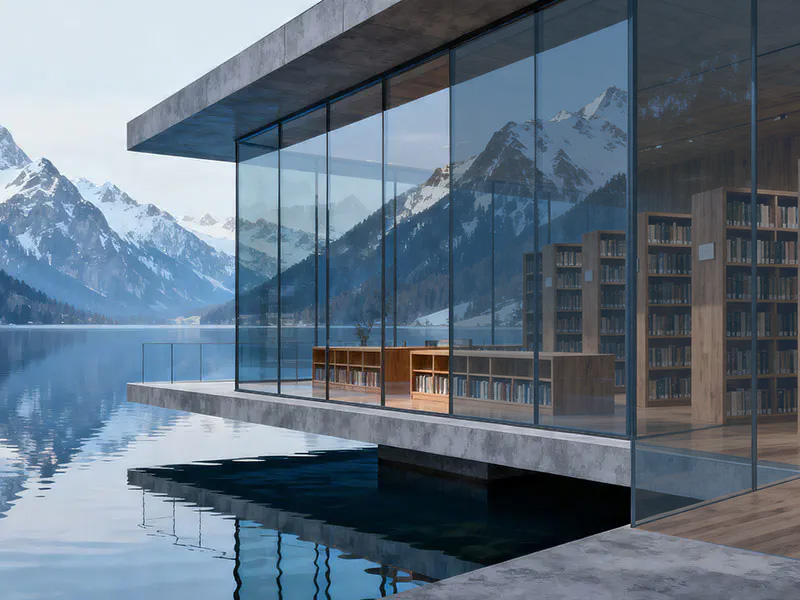
Advanced Solar Control & Safety for Modern Buildings Our architectural films are engineered using state-of-the-art Magnetron Sputtering Technology...
See Details -
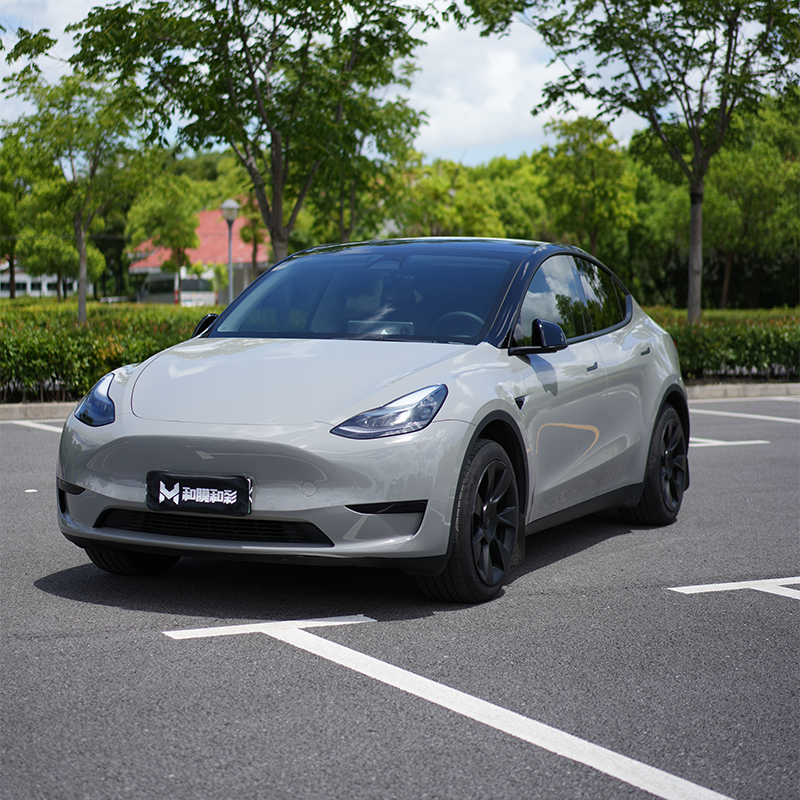
Matte Grey Satin Finish TPU Car Wrap Film presents a versatile, sophisticated grey in an elegant satin finish that bridges full matte and high gloss. ...
See Details -

The Invisible Shield for High-Value Surfaces Preserve the original beauty of your premium furniture with our specialized Surface Protection Film. This...
See Details
GET THE LATEST QUOTATIONS
-
 No. 5, Datang Road, East District, Development Zone, Guangde City, Xuancheng City, Anhui Province,242200, China
-
 [email protected]
-
 +86 18170340295
PRODUCTS
MOBILE WEB
Copyright Anhui He He New Materials Co., Ltd. All Rights Reserved.
 Wholesale TPU PPF Film Automotive TPU PPF Manufacturer